Show It Once. Let ChatGPT Learn the Work.
OpenAI’s new Mac features point towards a different relationship with AI: less repeated explanation, more context and demonstration—within limits the announcement does not yet answer.
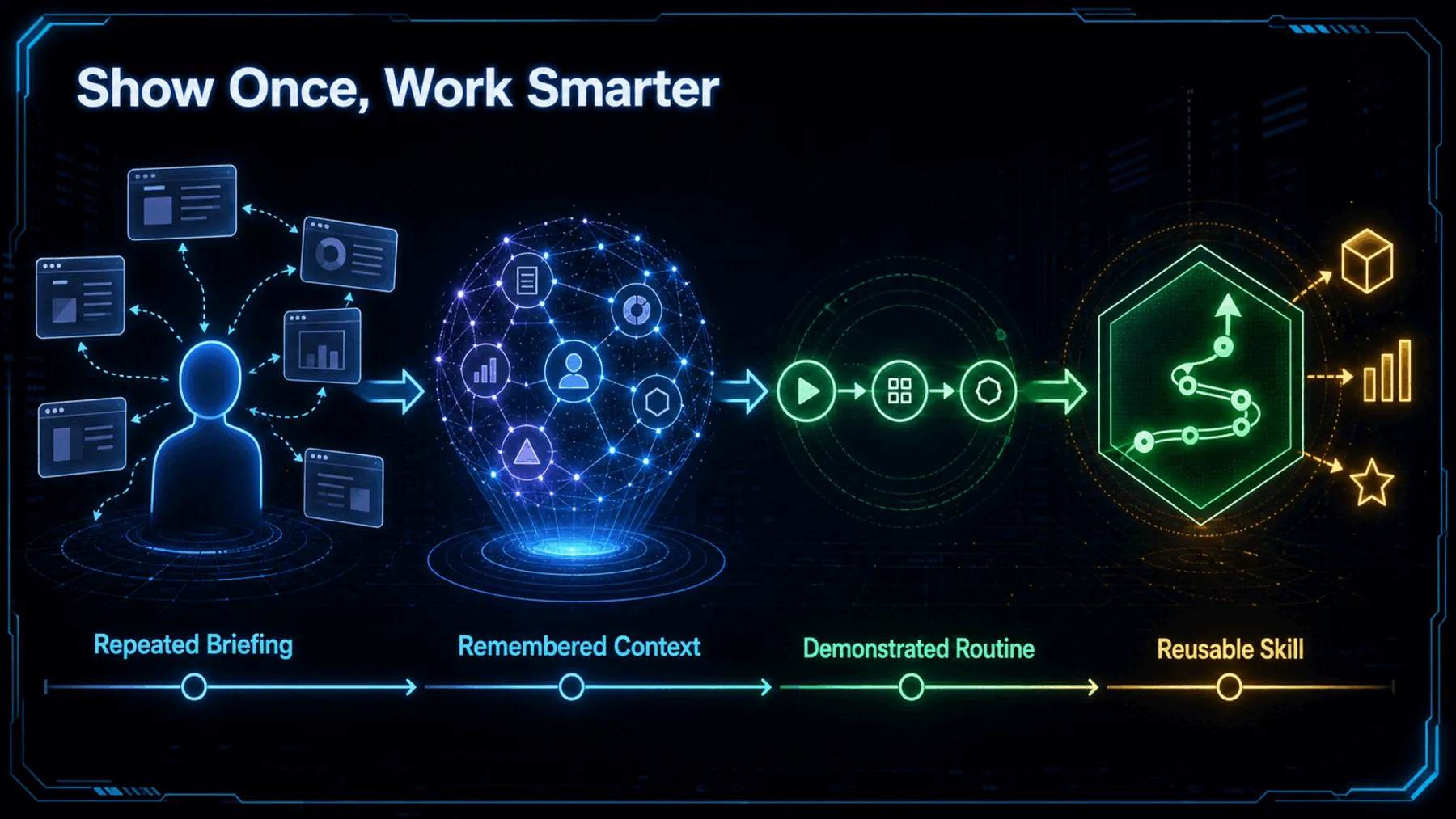
We know the rhythm: several apps open, a recurring task underway, and the same context explained again before an assistant can help. OpenAI’s two Mac updates present a different possibility—one feature remembers activity across apps and websites; another turns a shown routine into a reusable skill.
That is a promising distinction, not proof of a finished autonomous workflow. OpenAI’s short announcement leaves the controls around that promise largely unstated.
Your Work Becomes the Brief
Context can reduce the need to start from zero; demonstration can turn a recurring routine into instruction.
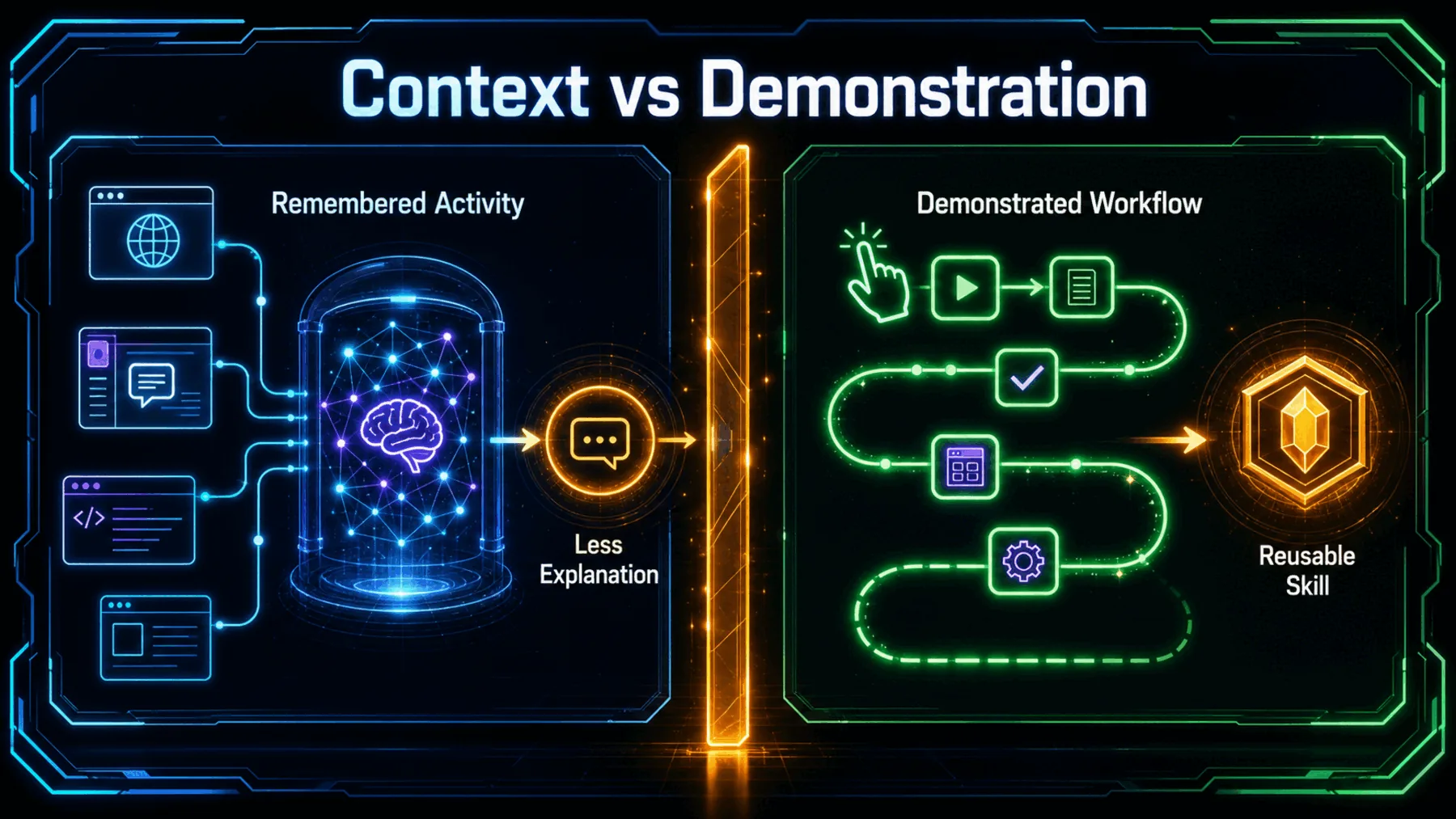
Computer History and Record & Replay should not be collapsed into one capability. OpenAI says Computer History can remember activity across apps and websites so later conversations require less explanation. Record & Replay, by contrast, is presented as a way to turn go-to workflows into reusable skills by showing ChatGPT Work and Codex what to do.
The distinction matters because the practical questions differ. Remembered context concerns what an assistant can draw on in conversation; a demonstrated routine concerns what we can teach it to repeat. Neither statement tells us the scope, controls, retention, or reliability behind the headline promise.
What OpenAI Actually Announced
Two separate Mac updates, with named regions and access boundaries.
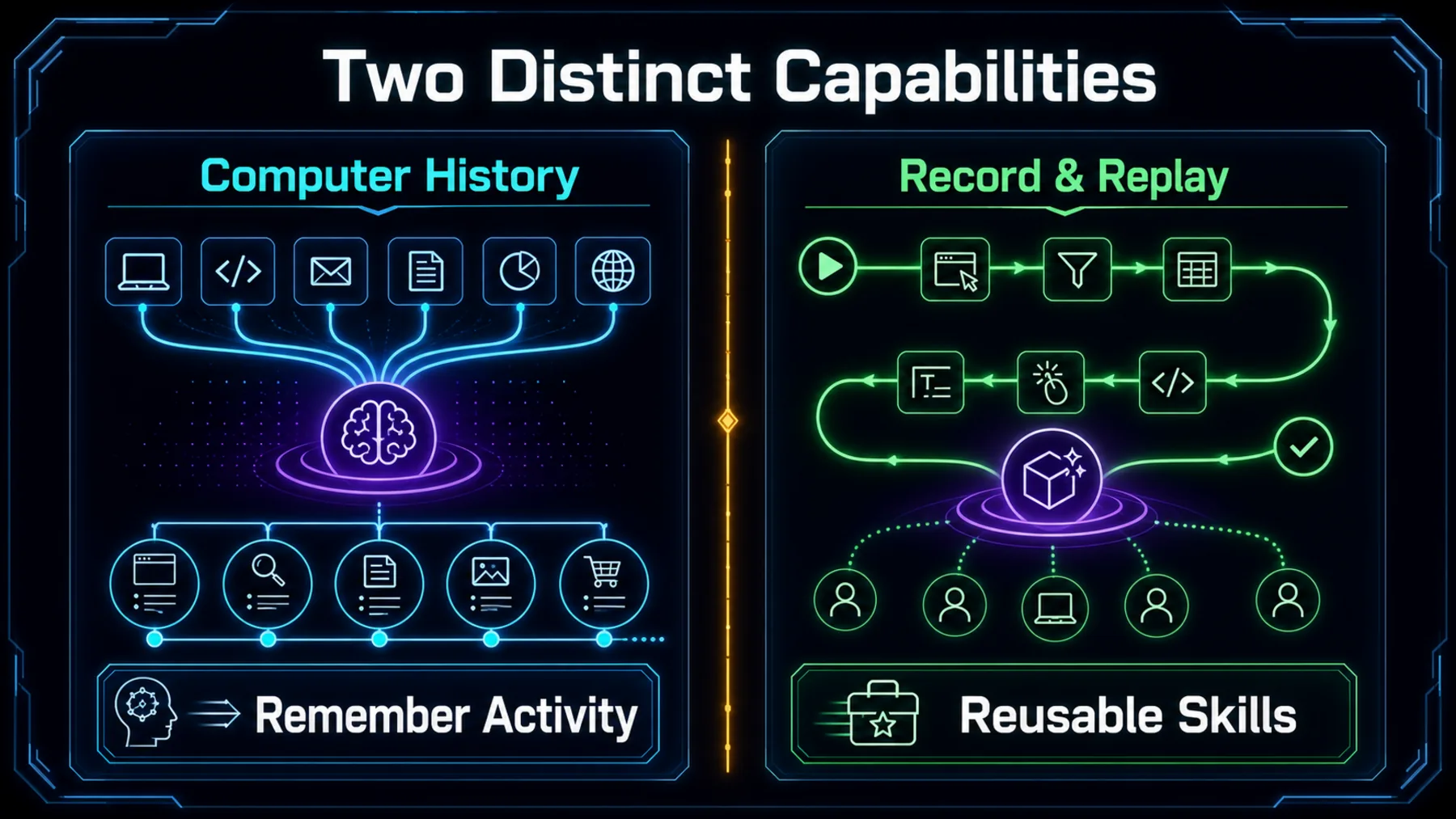
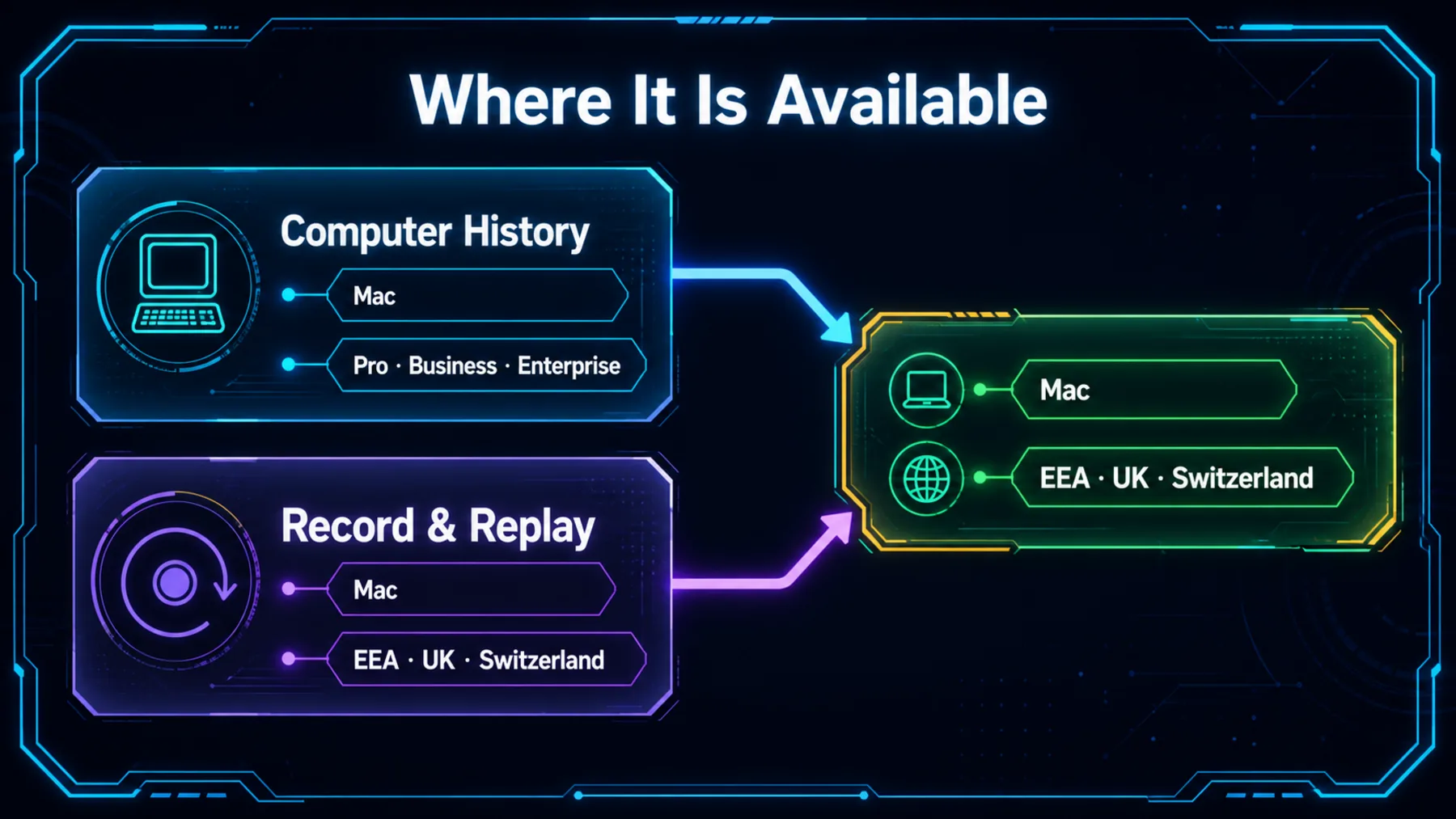
The regional detail is useful because it sets a real boundary. OpenAI says Computer History is available in the EEA, UK and Switzerland for ChatGPT Pro, Business and Enterprise users on Mac. It says Record & Replay is available in the ChatGPT app for macOS across those same regions.
Beyond that, restraint is warranted. The posts do not establish pricing, broader device support, rollout mechanics, or access for plans not named by OpenAI.
Computer History, in OpenAI’s Words
The stated benefit is less repeated explanation, not a claim that every action is recorded.
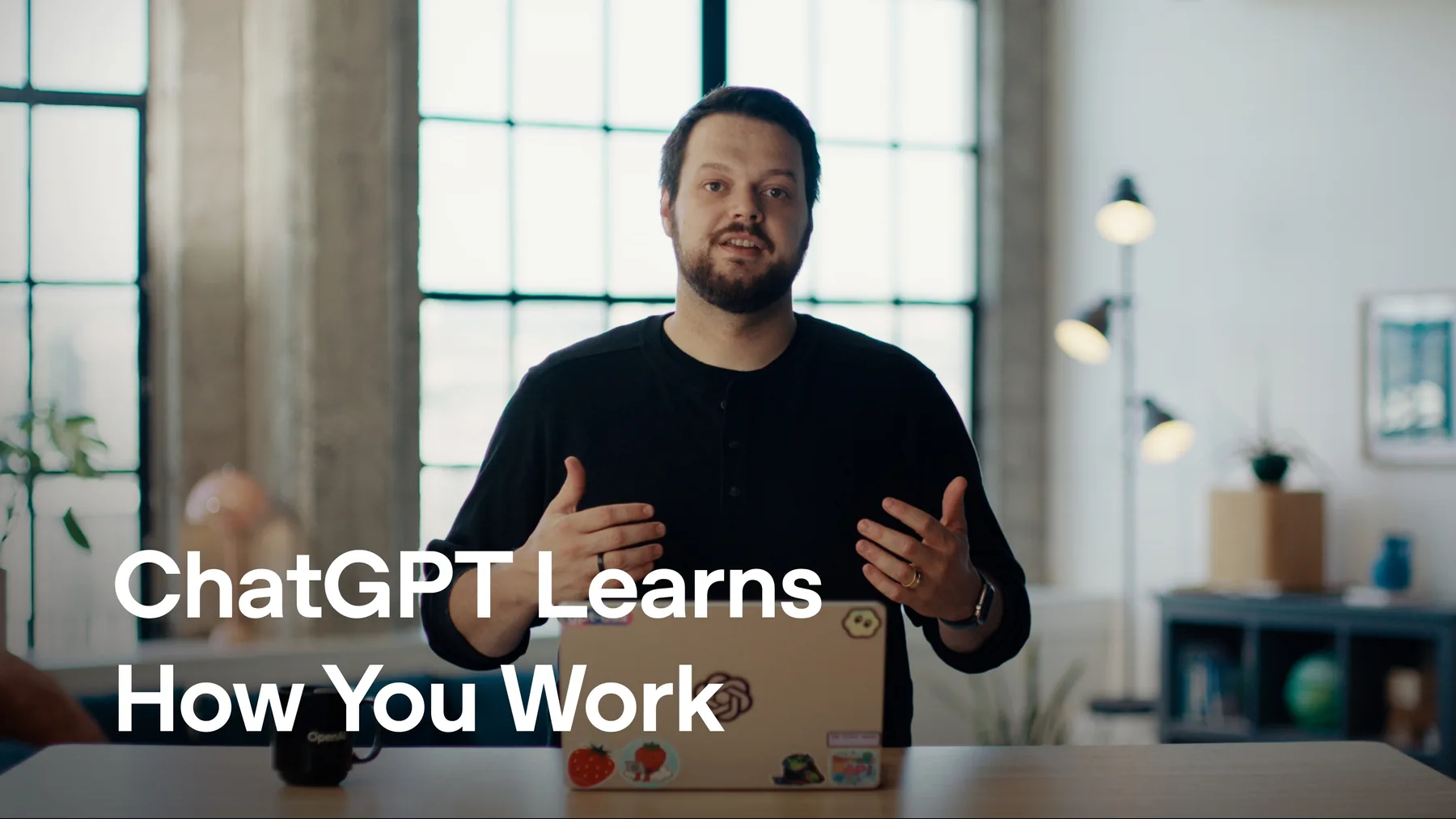
The appeal is immediately recognisable. If the surrounding work already gives an assistant useful context, we may spend less time reconstructing a task from scratch at the start of every conversation.
But OpenAI’s wording is narrower than the broadest interpretation. It says ChatGPT can remember activity across apps and websites. It does not say that all activity is captured, what is excluded, how consent works, how long information is kept, or how it can be removed.
“ChatGPT can remember activity across your apps and websites, so future conversations feel more personalized and require less explanation.”
OpenAI Developers
The Promise—and Its Limits
Record & Replay is framed as a way to show a recurring workflow rather than describe it.
Record & Replay carries the sharper idea: demonstration can become instruction. OpenAI says we can turn go-to workflows into reusable skills by showing, not just telling, ChatGPT Work and Codex what to do.
That is a capability claim worth testing, not a reason to assume an entire workflow can run without supervision. The announcement does not explain which actions can be recorded, what review is available, how exceptions are handled, or how consistently a demonstrated routine will perform.
Context Versus Demonstration
One update concerns what ChatGPT can remember; the other concerns what we can show it to do.
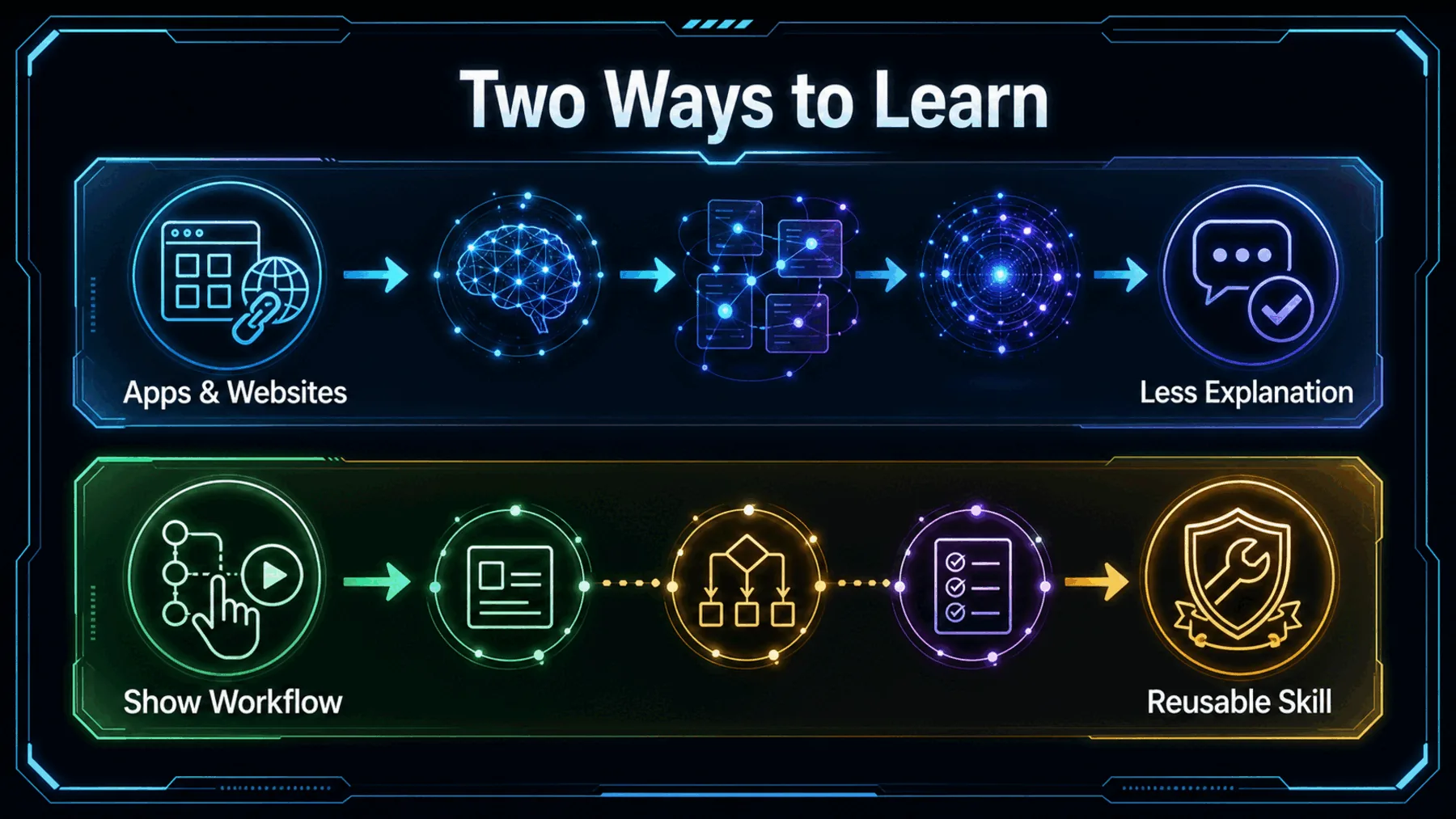
The cleanest way to read the announcement is as two routes into better assistance. Context may help a conversation begin closer to the work already underway. Demonstration may help a repeated routine become something we can call on again.
OpenAI has not said these routes are technically dependent, nor that either removes the need for judgement. Keeping that line clear is what makes the announcement useful rather than inflated.
Remember
OpenAI describes Computer History as context from activity across apps and websites.
Show
OpenAI describes Record & Replay as teaching through a demonstrated routine.
Review
The source leaves the controls, scope and reliability of both claims unanswered.
What Using It Could Change
The potential gain is less repeated setup; the unanswered question is how much control we retain.
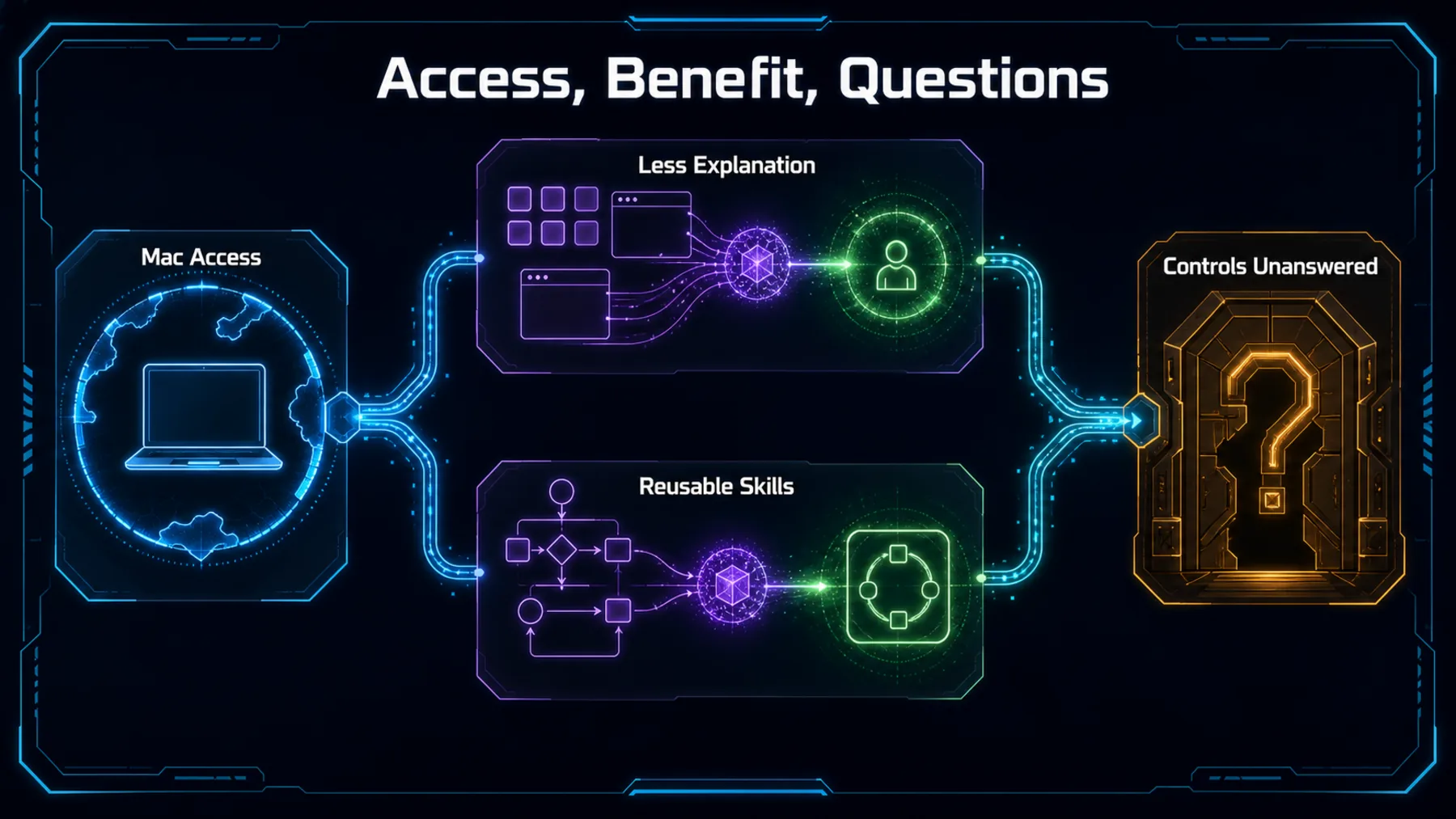
If we have access on the Mac plans and regions OpenAI names, the first benefit may be simple: less effort spent reintroducing a task. A demonstrated routine may also offer a more direct starting point than another long explanation.
Before treating either as part of a serious operating process, we would need more than the launch wording. The unanswered questions are practical: what is captured, what can be reviewed, what can be changed or deleted, and where human oversight remains necessary.
Scope
What activity and workflow steps are included or excluded?
Control
What review, retention and deletion controls are available?
Reliability
How does a reusable skill behave when the routine changes or fails?
The New Interface Is Your Work
The most consequential change may be moving from instructions alone to context and demonstration.
The new interface is not only the prompt box. It is the work we can place around it—and, where OpenAI’s promise holds, show it once.
Altior synthesis from OpenAI’s 20 August announcement
OpenAI’s announcement is small in detail but large in implication. If context and demonstration become dependable parts of how we work with AI, the best instruction may no longer begin with a blank page.
That possibility does not erase the need for controls. It makes them more important. The closer an assistant sits to our working history and routines, the more clearly we need to understand its boundaries before we rely on it.
Turn a repeated workflow into a teachable brief
Help us turn a recurring work routine into a reusable brief. Ask us to describe the routine once, then return: 1) the goal, 2) numbered steps, 3) inputs and outputs, 4) decisions that need human judgement, 5) exceptions and risks, and 6) a short list of unanswered questions. Do not invent tools, permissions, timings, or automation. Mark every assumption clearly.Ready to copy
Watch the Controls Next
The announcement makes a credible case for testing how context and demonstration change the setup of recurring work. The next official evidence needs to explain the controls around that change.
Try the promptWhat to watch next
- Control detail
- Workflow scope
- Reliability evidence