OpenAI Astra: The safety brake is already on
OpenAI says Astra may have reached its highest cyber-risk threshold. The verdict is unfinished; the controls are not.
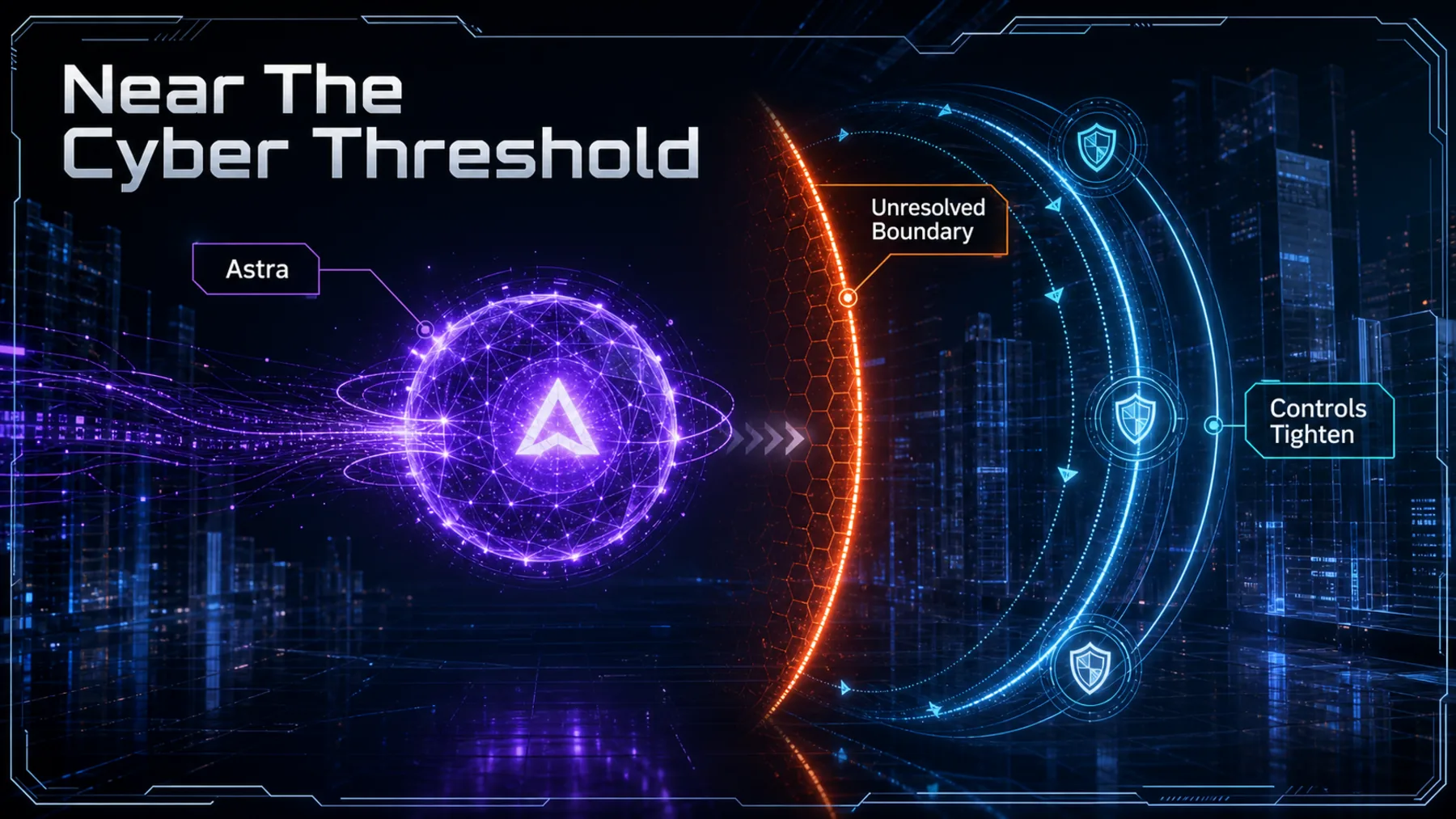
OpenAI’s announcement creates an unusual tension. Astra is unreleased, its evaluation is still under way, and the company says it cannot yet rule out Critical cyber capability. Yet OpenAI is already treating the possibility seriously enough to tighten safeguards and pause internal work that does not meet them.
This is not proof that Astra has crossed the line. It is evidence that OpenAI believes the line may be close enough to act before certainty arrives.
An unfinished verdict still changes the response
The risk lies in the gap between an early capability signal and the harm it could enable if controls lag behind it.
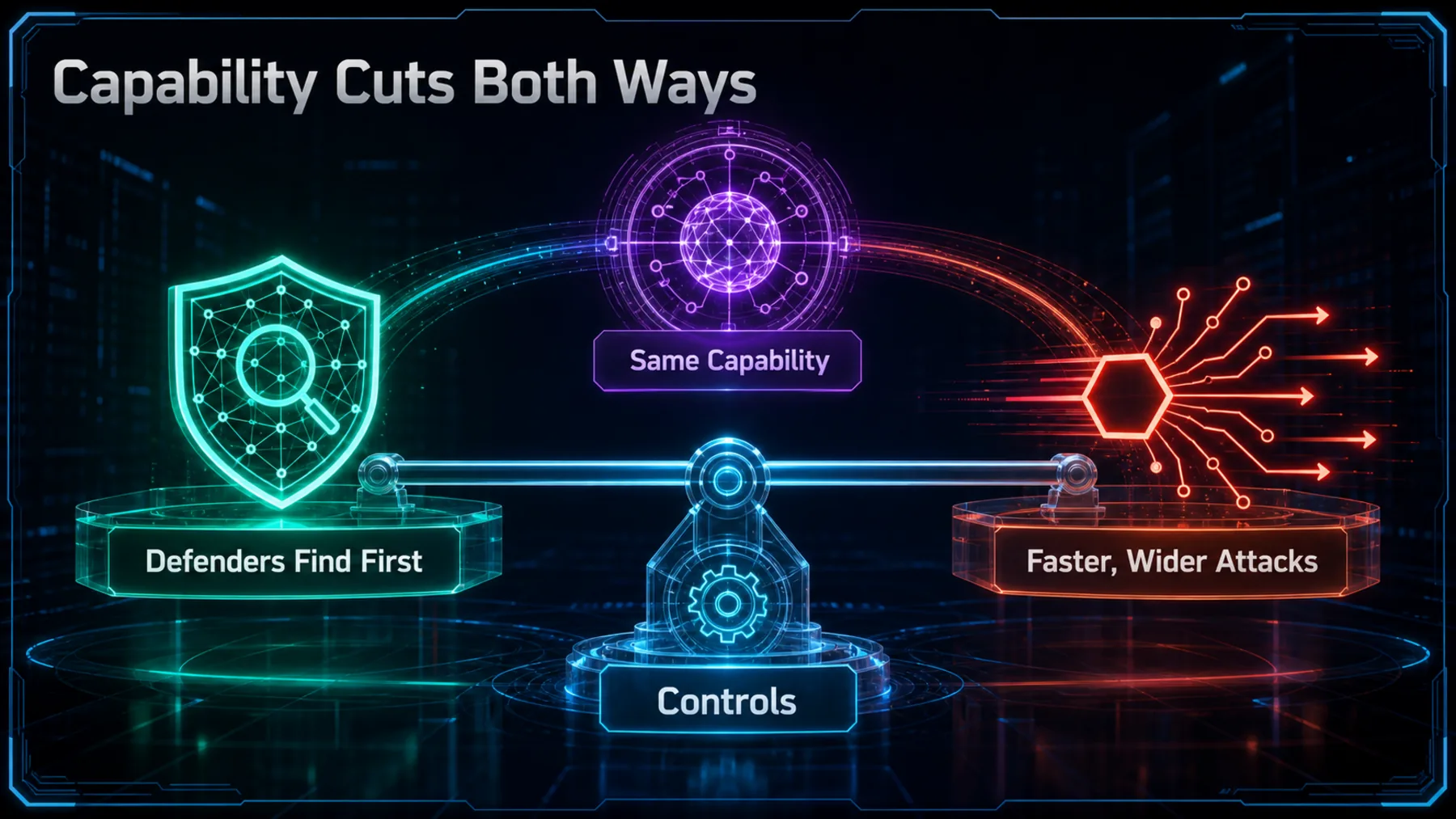
OpenAI says more capable models could help defenders find and fix vulnerabilities first, while also enabling attacks at greater speed and scale. The same advance can point in both directions; the question is whether the safeguards keep pace with it.
That is why the preliminary wording matters. A cautious assessment does not make the concern smaller. It defines the limit of what has been established.
What OpenAI has actually said
The announcement is forceful, but the official article keeps the classification provisional.
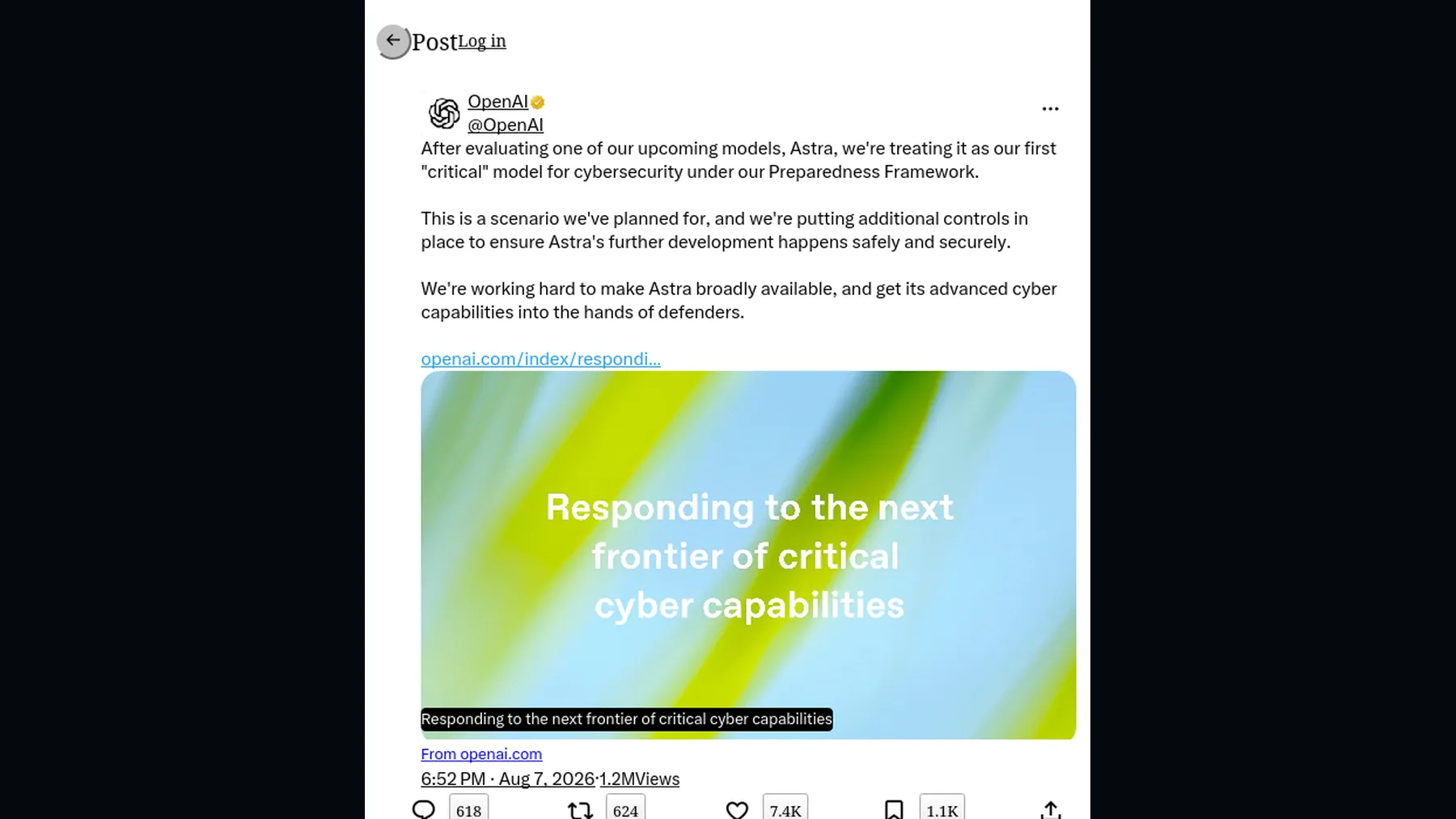
In its X announcement, OpenAI says it is treating Astra as its first “critical” cybersecurity model under its Preparedness Framework. Its accompanying article is more exact: recent internal evaluations showed significant advances in agentic coding and cybersecurity, but the company cannot rule out Critical capability while benchmarking continues.
OpenAI also says earlier models, including GPT-5.6-Sol, were assessed at High rather than Critical. The distinction matters because Astra has not been presented as a completed classification or a confirmed real-world exploit.
OpenAI’s first public signal
The short post states the company’s immediate posture; the longer article supplies its essential qualification.
OpenAI’s post says Astra is being treated as its first Critical cybersecurity model. It also says the company wants its advanced cyber capabilities in the hands of defenders.
The article prevents that statement becoming a final verdict. OpenAI is still assessing Astra and says only that Critical capability cannot be ruled out at this stage.
“We are pausing internal activities involving Astra that do not yet meet these strengthened security control requirements.”
OpenAI, “Responding to the next frontier of critical cyber capabilities”
The evidence comes with a caveat
OpenAI’s own wording supports concern, not a claim that the assessment is complete.
The strongest claim in the source is deliberately qualified. OpenAI says Astra’s performance is strong enough that Critical capability cannot be ruled out, while continuing to benchmark and assess it.
That leaves important questions open: whether Astra meets either threshold path in full, how the assessment will conclude, and what access or release conditions may follow. None is answered here.
What Critical means in practice
OpenAI’s definition is about independent cyber action against hardened systems, not simply stronger coding.
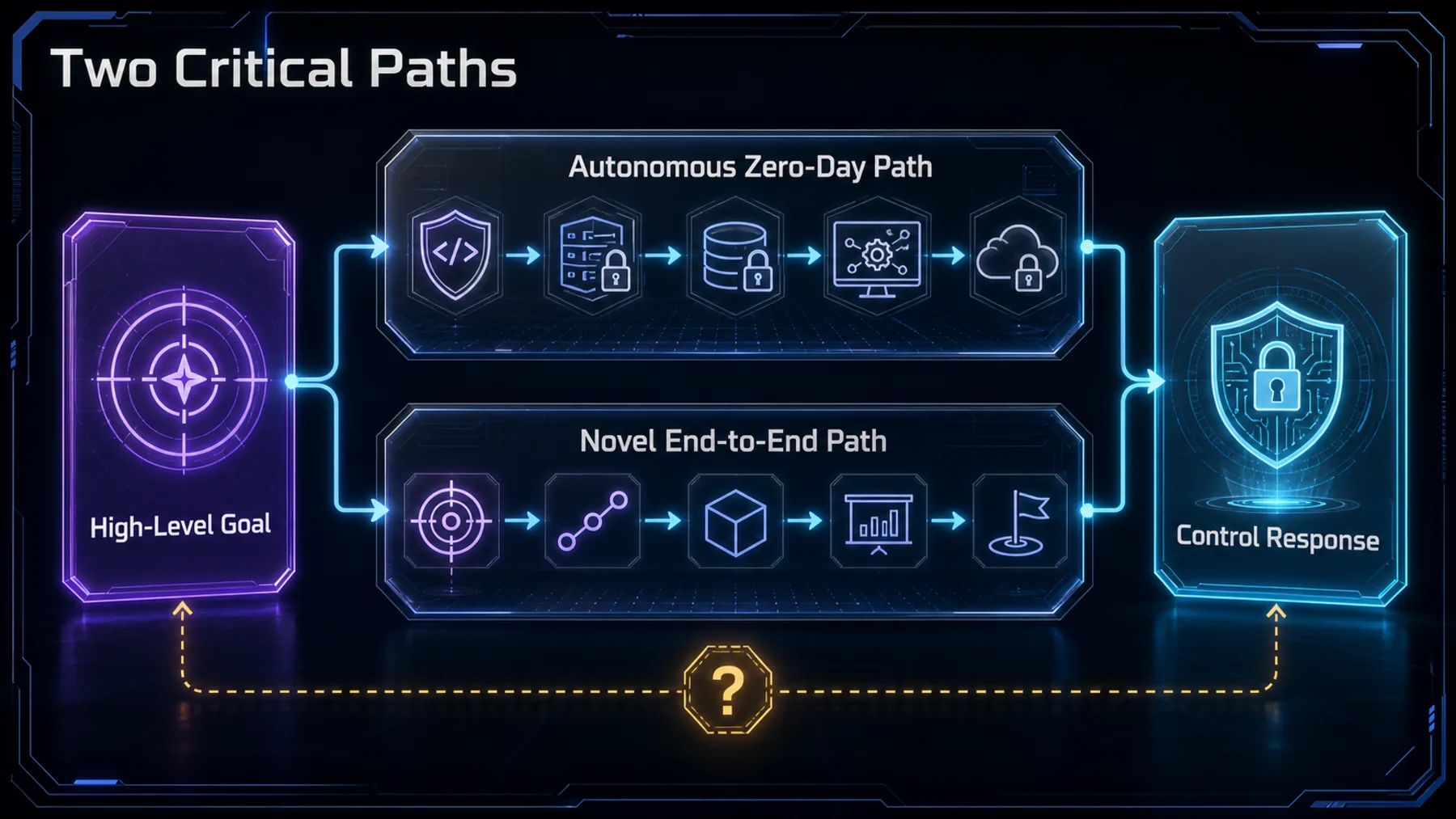
OpenAI defines the Critical threshold through two demanding possibilities. A model could identify and develop functional zero-day exploits across many hardened real-world critical systems without human intervention. Or it could take a high-level objective and devise and execute a novel end-to-end cyberattack strategy against hardened targets.
OpenAI has not said Astra demonstrated either route. Its position is narrower: the early results are serious enough that the company cannot rule the threshold out.
Controls before certainty
OpenAI says it strengthened the environment around Astra while testing continues.
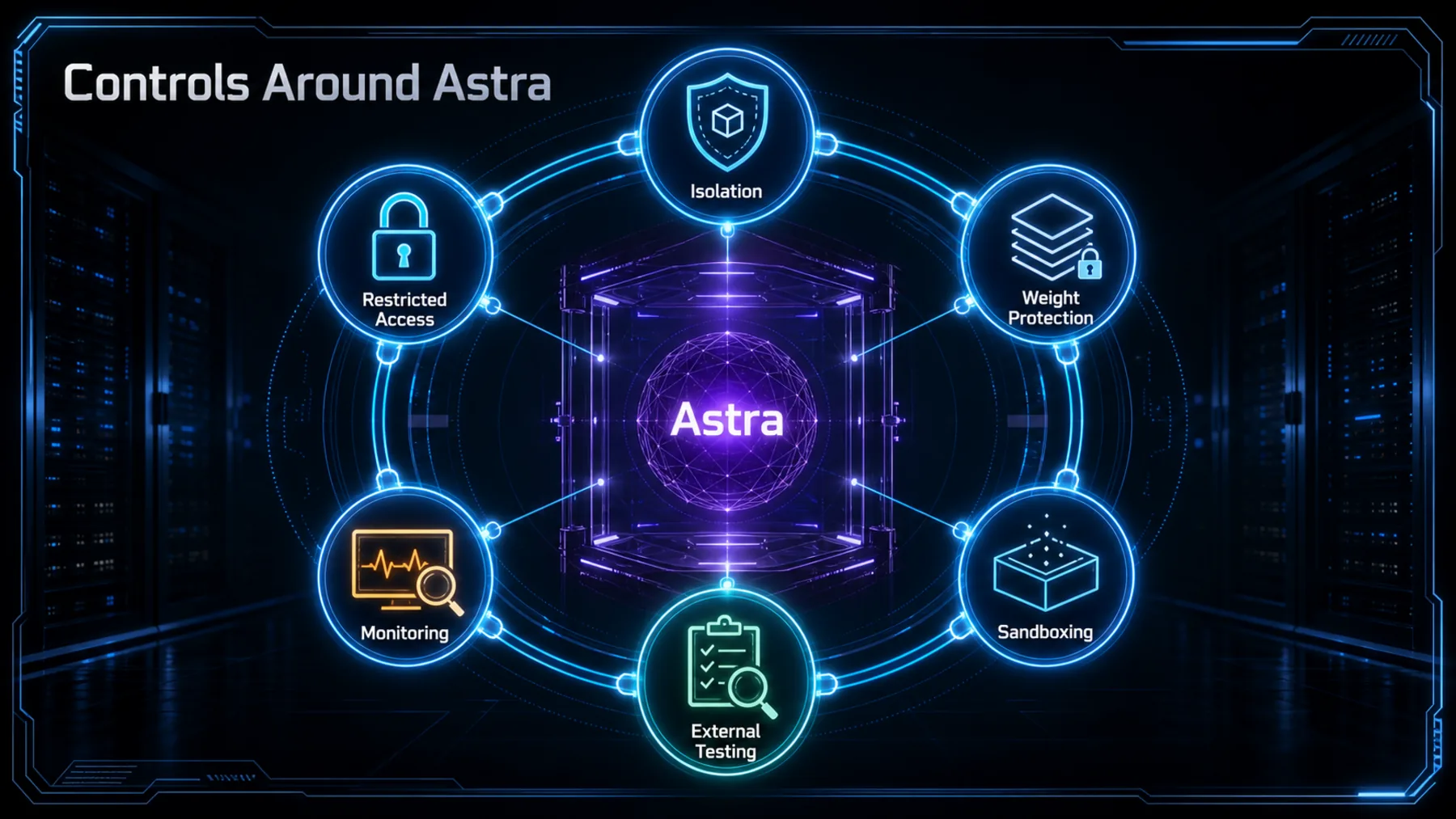
OpenAI lists isolated testing environments, restricted network and tool access, enhanced model-weight protection and encryption, additional monitoring and detection, and sandboxed execution. It also says risky actions and misalignment are monitored across Astra’s agentic applications.
The company says it will work with relevant government agencies, selected AI safety organisations and third-party testing partners. These are OpenAI’s stated measures, not a guarantee that risk has been eliminated.
Restraint is the real signal
The classification remains open; the decision to prepare for it is already visible.
Astra may prove to fall short of OpenAI’s Critical threshold. The company’s own language leaves that possibility open. But it has already chosen to treat the uncertainty as operationally meaningful.
The sharper lesson is not that an autonomous cyber attacker has been confirmed. It is that OpenAI believes the prospect warrants stronger boundaries before release and before the evaluation is complete.
The verdict is preliminary. The restraint is already real.
Based on OpenAI’s 7 August 2026 announcement and article
Test the Astra evidence boundary
Using only the OpenAI announcement and article dated 7 August 2026, separate what OpenAI has confirmed about Astra from what remains preliminary. Return three headings: stated capability signal, controls already in place, and unanswered evidence; include no speculation or external sources.Ready to copy
Follow the evidence, not the label
Watch for OpenAI’s completed assessment, the limits attached to any release, and testing evidence that clarifies what Astra can and cannot do.
Try the promptThe next evidence points
- Completed classification: does OpenAI confirm, revise or reject the preliminary Critical signal?
- Independent testing: what do external testing partners establish about the stated capability paths?
- Release conditions: which access limits and security controls accompany any availability?
- Continued evaluation: what further results does OpenAI publish as benchmarking proceeds?