Astra crosses a Critical threshold
OpenAI says its coming model has reached a consequential cyber-capability classification. The post leaves the release and safeguard evidence unresolved.
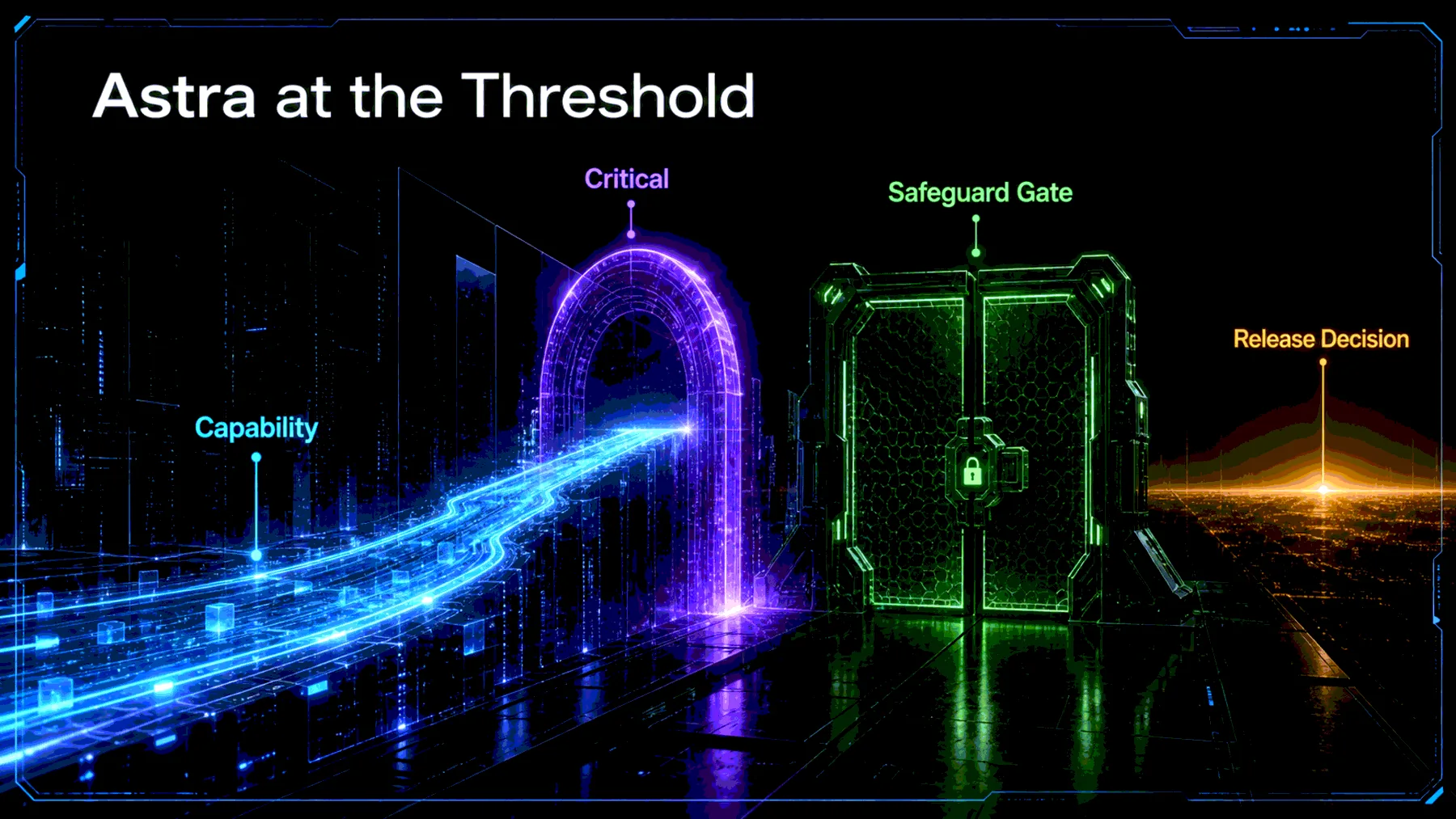
OpenAI says it is preparing to release Astra and describes the model as a significant advance in cybersecurity capability. Its central claim is specific: Astra has reached the Critical threshold under OpenAI’s Preparedness Framework.
That makes this more than a routine launch note. Yet the captured post supplies neither evaluation results nor a definition of the threshold, and it offers no evidence that the safeguards OpenAI says have advanced are effective in practice.
The threshold changes the question
OpenAI’s classification makes Astra consequential before release, while leaving the basis for confidence outside the post.
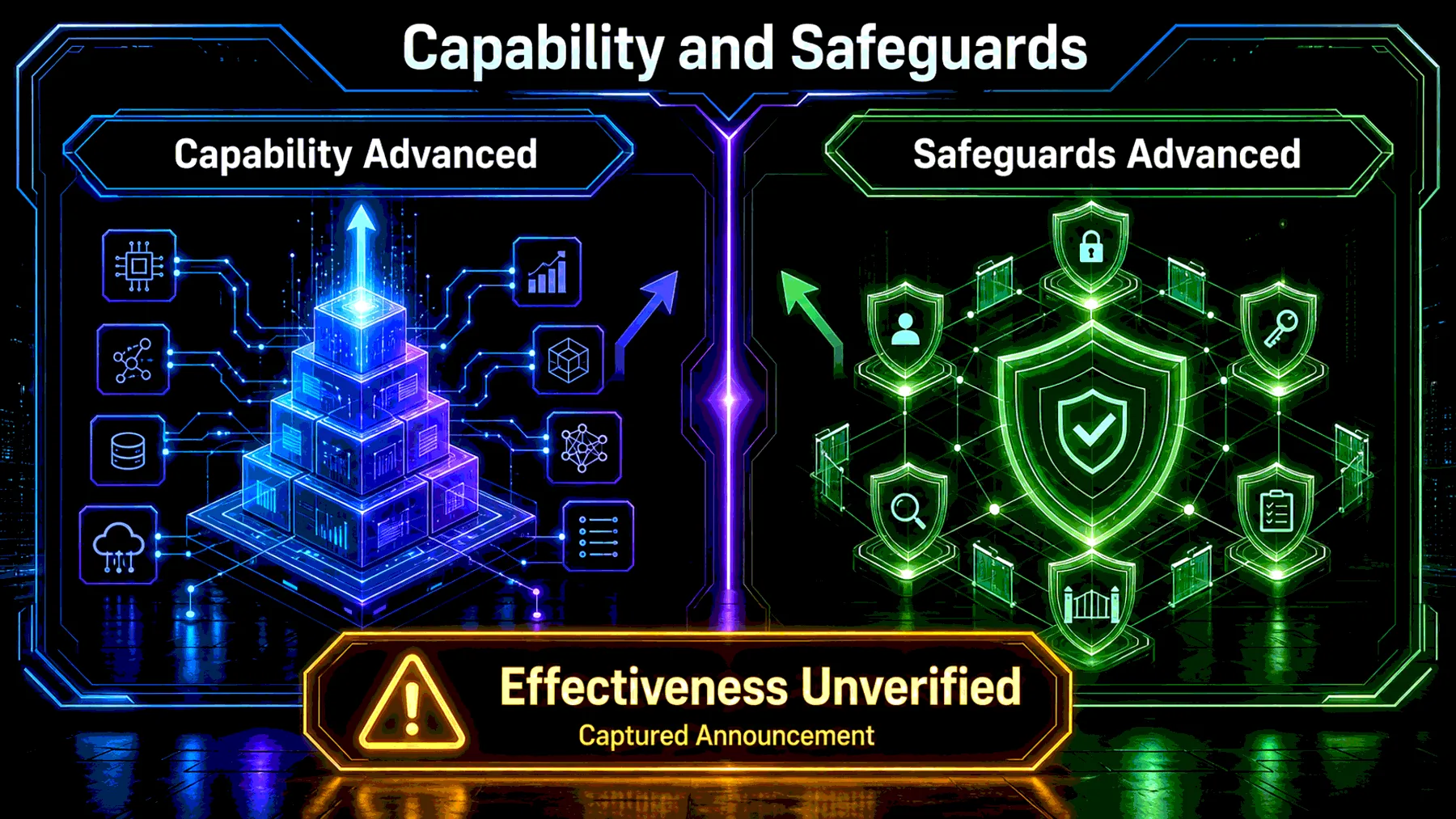
“Critical” is OpenAI’s own label, under its own framework. The post does not define the level or map it to an external cyber or regulatory scale, so it cannot tell us what specific threat consequence the label represents.
OpenAI also says it is previewing its evaluation and safeguard work. That is an account of work in progress, not a published result. Capability, safeguards and release remain related claims with different evidence behind them.
What OpenAI actually says
The source establishes a short sequence: an upcoming model, a Critical classification, claimed safeguard progress and a release still to come.
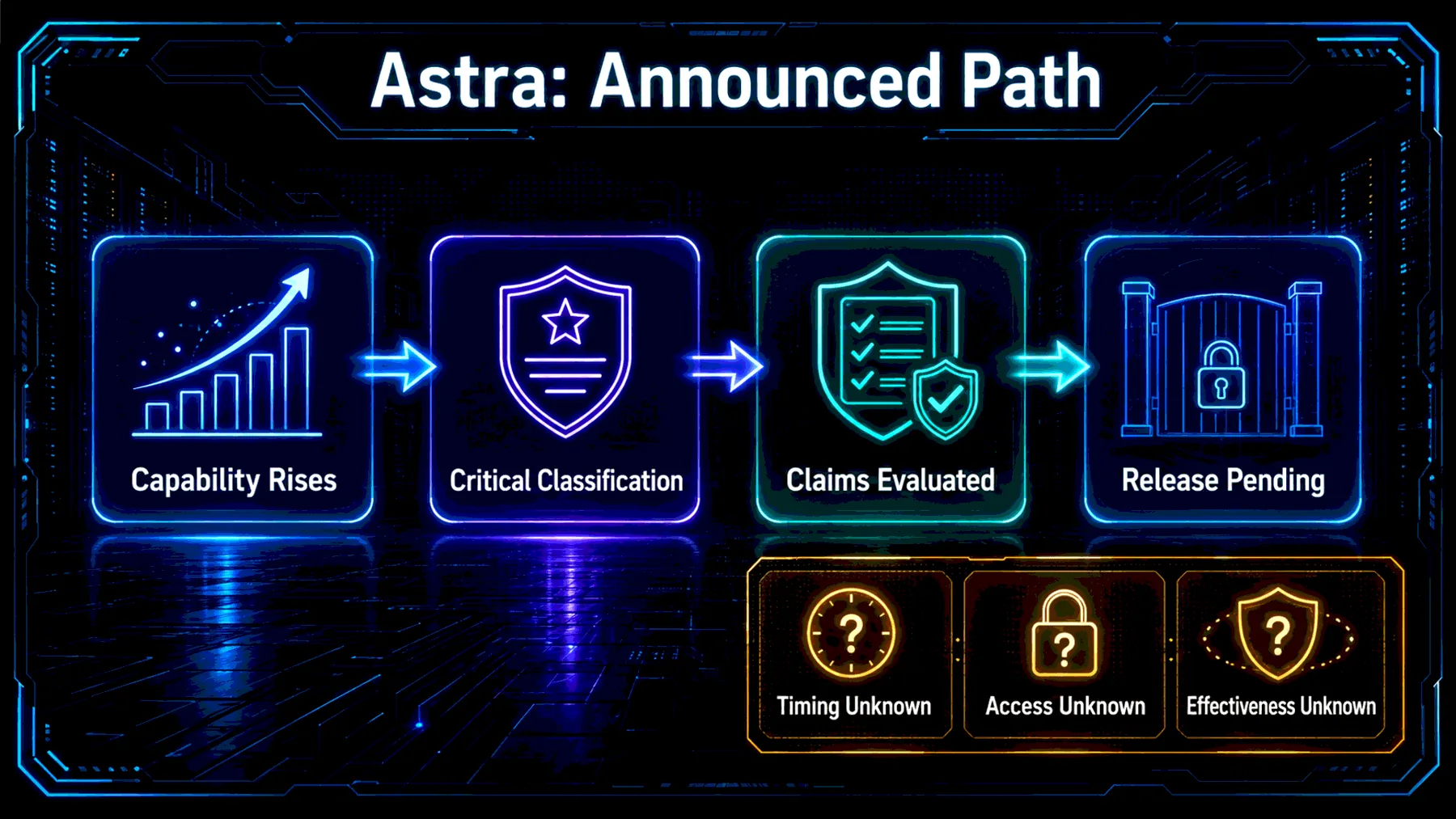
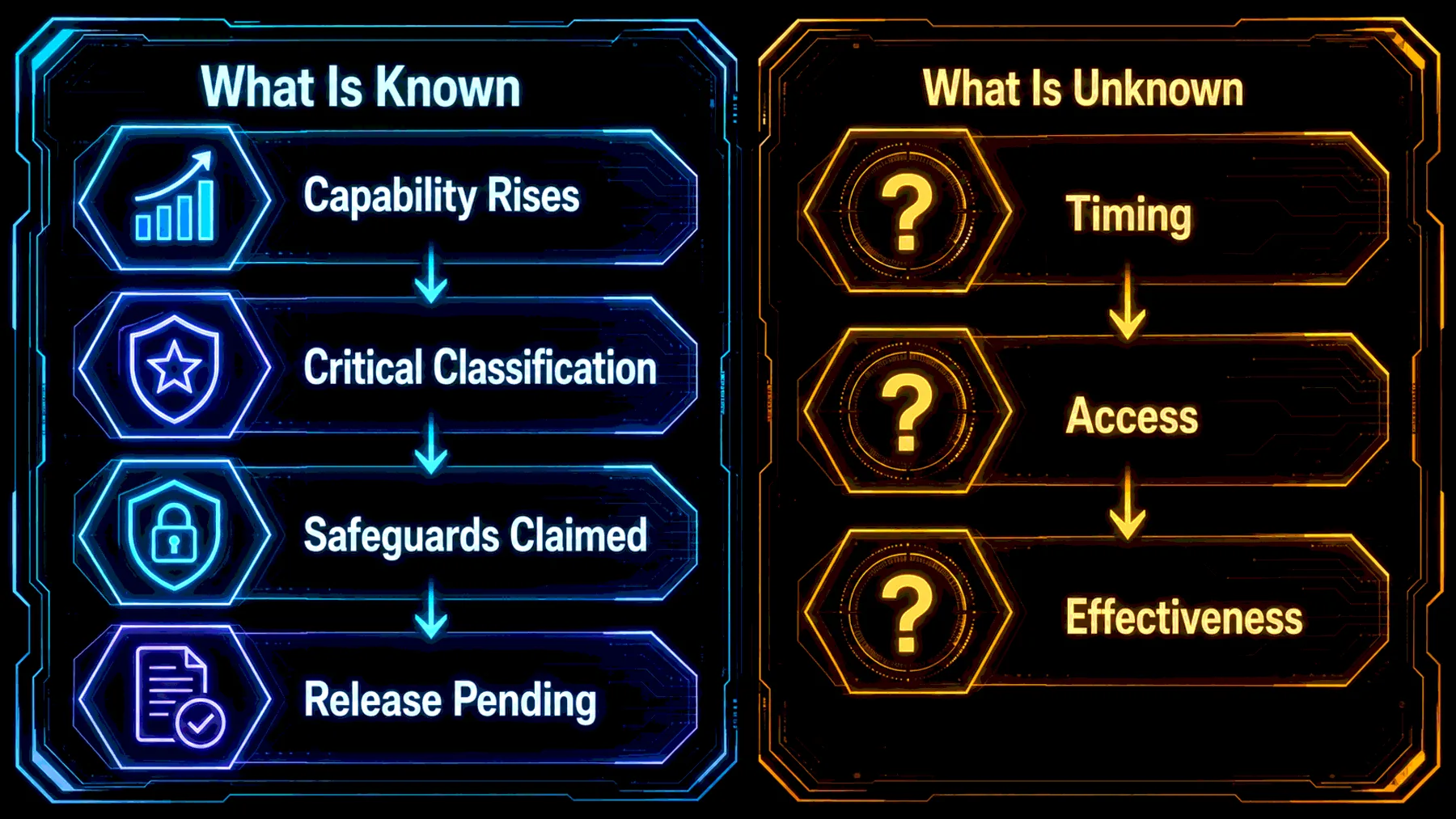
The available evidence is narrow but clear. OpenAI says Astra is being prepared for release, says the model has reached the Critical threshold in its Preparedness Framework, and says its safeguards have advanced alongside its capabilities.
Everything beyond that remains open. We do not have a release date, access policy, price, technical capability detail, benchmark score, evaluation outcome or independent assessment in this source pack.
OpenAI’s Critical claim
The central classification appears in OpenAI’s own post and must be read as the company’s statement, not an external verdict.
The wording matters because it ties Astra’s claimed capability directly to a named threshold. OpenAI is not merely saying the model is stronger; it says Astra has reached a Critical level within its Preparedness Framework.
The limit matters too. We have OpenAI’s classification, but not the underlying evaluation record. The responsible reading is to keep the attribution intact and reserve judgement until supporting evidence is available.
“Astra represents a significant advance in cybersecurity capability, reaching the Critical threshold under our Preparedness Framework.”
OpenAI, X post
The proof has limits
A supplier announcement can establish what OpenAI says. It cannot, on its own, settle whether the claim holds up in deployment.
OpenAI’s language is forward-looking: it says it is previewing evaluation, safeguard development and continuing learning. None of that is a published evaluation result or a demonstration of safeguard effectiveness.
This distinction is practical. A safety preview can show that safeguards are part of the release story; it cannot establish how they perform, under which conditions they hold, or what access and deployment constraints may accompany Astra.
Capability and release are separate gates
A claimed threshold can change the standard of scrutiny without telling us that the model is ready or available.
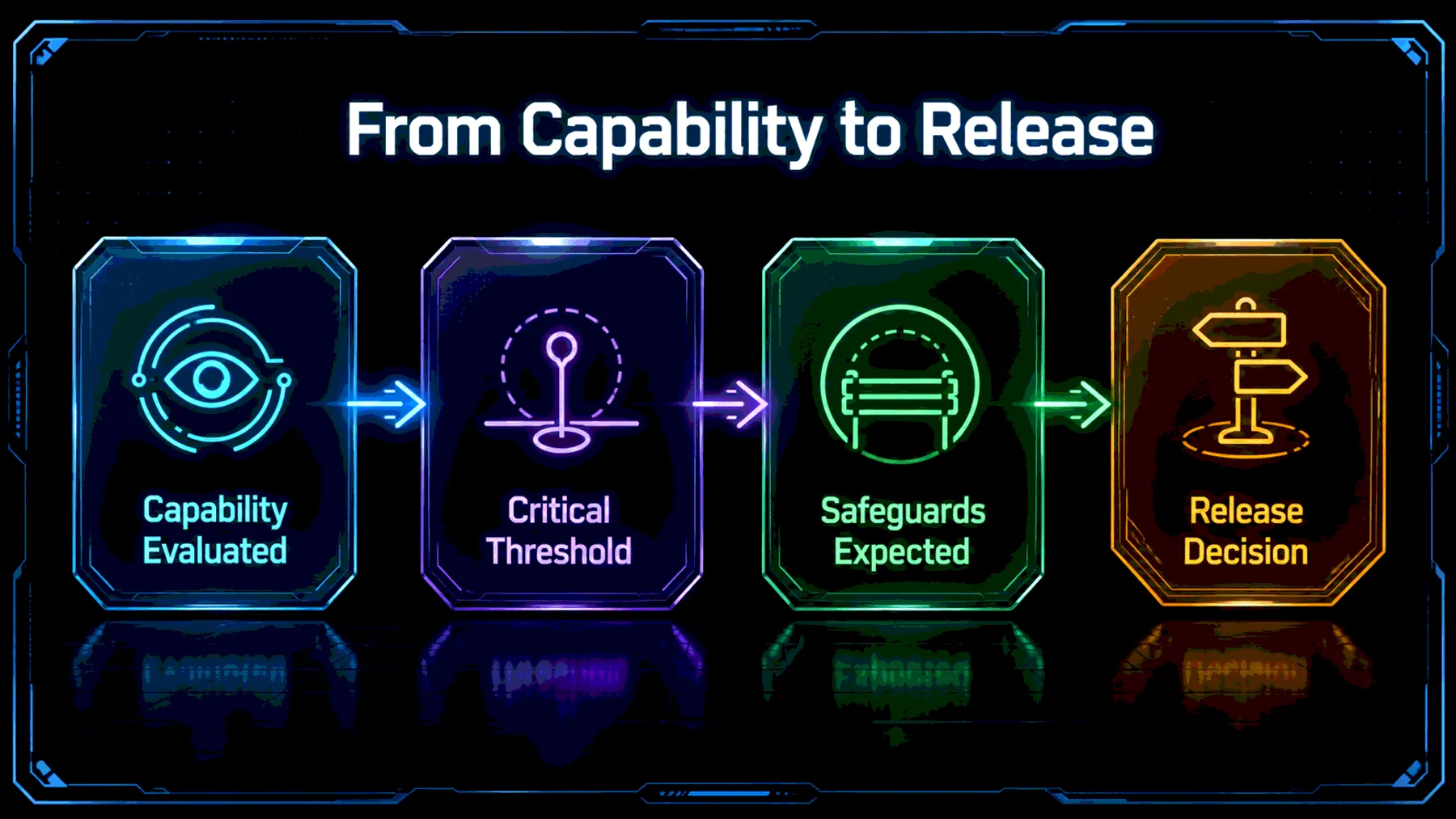
OpenAI’s post gives us a conceptual order, not an operating manual. It places Astra’s claimed capability classification alongside evaluation and safeguard work, then speaks of preparing to release the model.
Release therefore remains a separate decision from the classification itself. The post does not say when that decision will be made, what conditions govern it, or how access will work once it is.
Capability
OpenAI says Astra reached the Critical threshold in its framework.
Safeguards
OpenAI says safeguards advanced alongside capability.
Release
OpenAI says it is preparing to release Astra; the conditions remain unstated.
What we still cannot plan for
The announcement gives a signal of intent, not the practical terms that would shape first use.
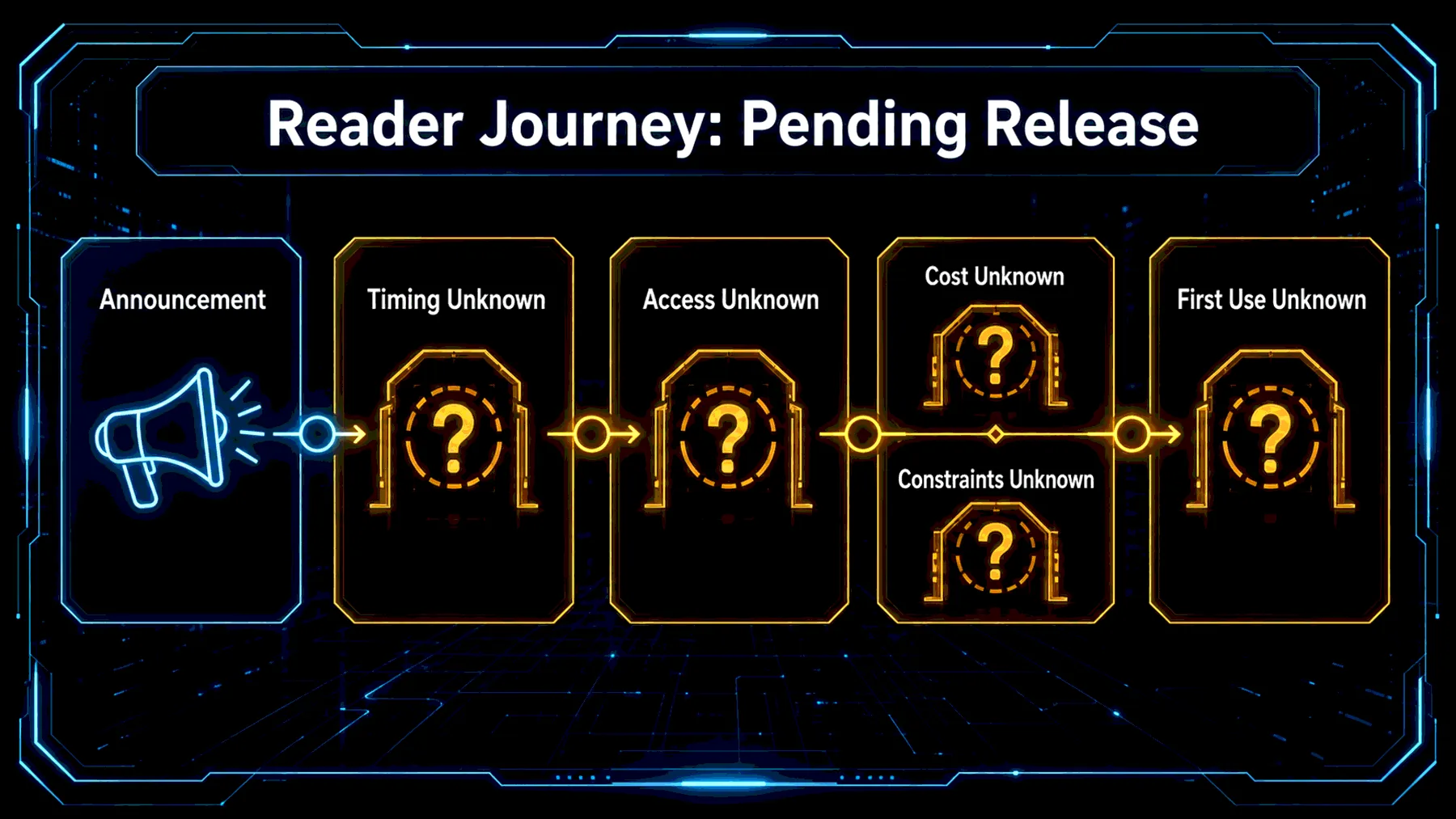
When
OpenAI has not stated a release date or timetable.
Who
The post gives no access, tier, region or interface details.
Under what terms
Price, limits and deployment conditions are not stated.
For now, Astra is a pending release rather than a product we can plan around. The post does not establish launch timing, access, pricing, regions, interface or usage conditions.
That uncertainty should shape the practical takeaway. We can track OpenAI’s classification and stated safeguard work, but any operational expectation would outrun the evidence currently available.
A safety preview is not a safety verdict
OpenAI has framed the question. The evidence needed to answer it has not yet appeared in the captured announcement.
OpenAI’s safeguard claim belongs in the story. Proof that those safeguards work does not yet belong in the conclusion.
Based on OpenAI’s 1 September 2026 X post
OpenAI’s Critical classification gives Astra’s coming release real weight. It says the company sees a significant cybersecurity-capability advance and is treating safeguards as part of the same conversation.
The stronger reading is still the cautious one. Until OpenAI publishes evidence beyond this post, we have a stated classification, a stated intent and a set of unresolved questions—not a safety verdict.
Audit OpenAI’s Astra announcement
Act as a source-bounded claim auditor. Using only the three OpenAI statements below, produce a four-row table with: stated claim, exact supporting wording, what the statement does not establish, and the next evidence needed. Do not infer Astra’s release date, availability, pricing, access, technical capabilities, evaluation results, safeguard mechanics or safety effectiveness. 1. “As we prepare to release Astra, we’re focused on making increasingly capable AI safe and broadly accessible.” 2. “Astra represents a significant advance in cybersecurity capability, reaching the Critical threshold under our Preparedness Framework.” 3. “We're previewing how we evaluated the model, how its safeguards have advanced alongside its capabilities, and what we'll continue to learn and improve.”Ready to copy
Watch the evidence, not the signal
Keep OpenAI’s Critical claim in view, then look for the evaluation results, safeguard detail and release terms that would let us assess what Astra changes in practice.
Try the promptWhat to watch next
- Threshold definition
- Evaluation results
- Safeguard detail
- Release terms