1,000 Fable 5.2 agents finish Fermat proof formalization in 30 hours
Under the same setup, Opus 5.5 reached 27%. The task was to translate an existing proof into steps a computer can check—not discover a new theorem.
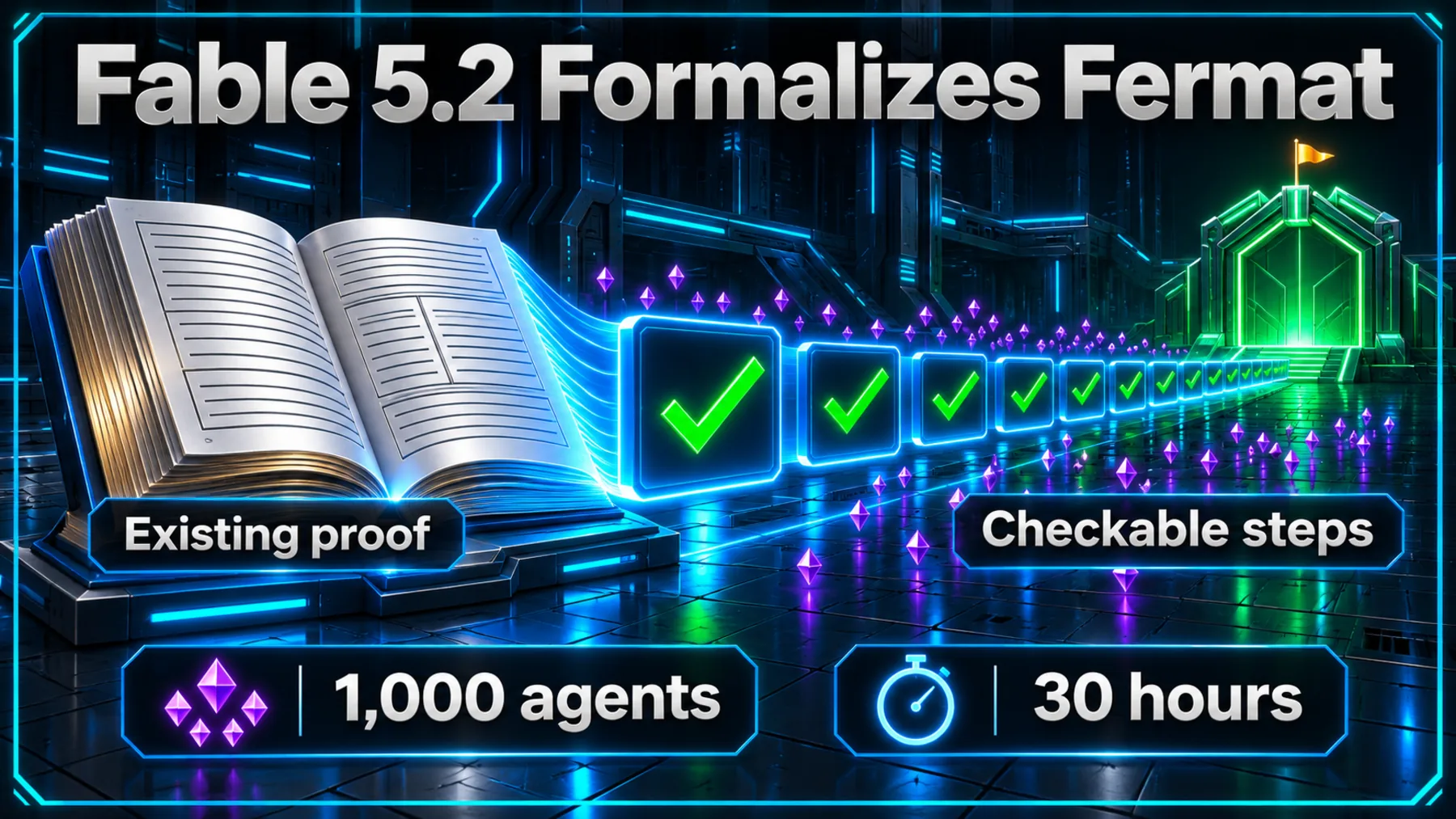
Fable 5.2’s 1,000-agent team completed the formalization of Fermat’s Last Theorem in 30 hours. At that endpoint, it reached 100% of the weighted share of statements proved, against Opus 5.5’s 27% under the same setup. The difference is substantial; understanding it starts with the job the agents were doing.
A known proof becomes checkable
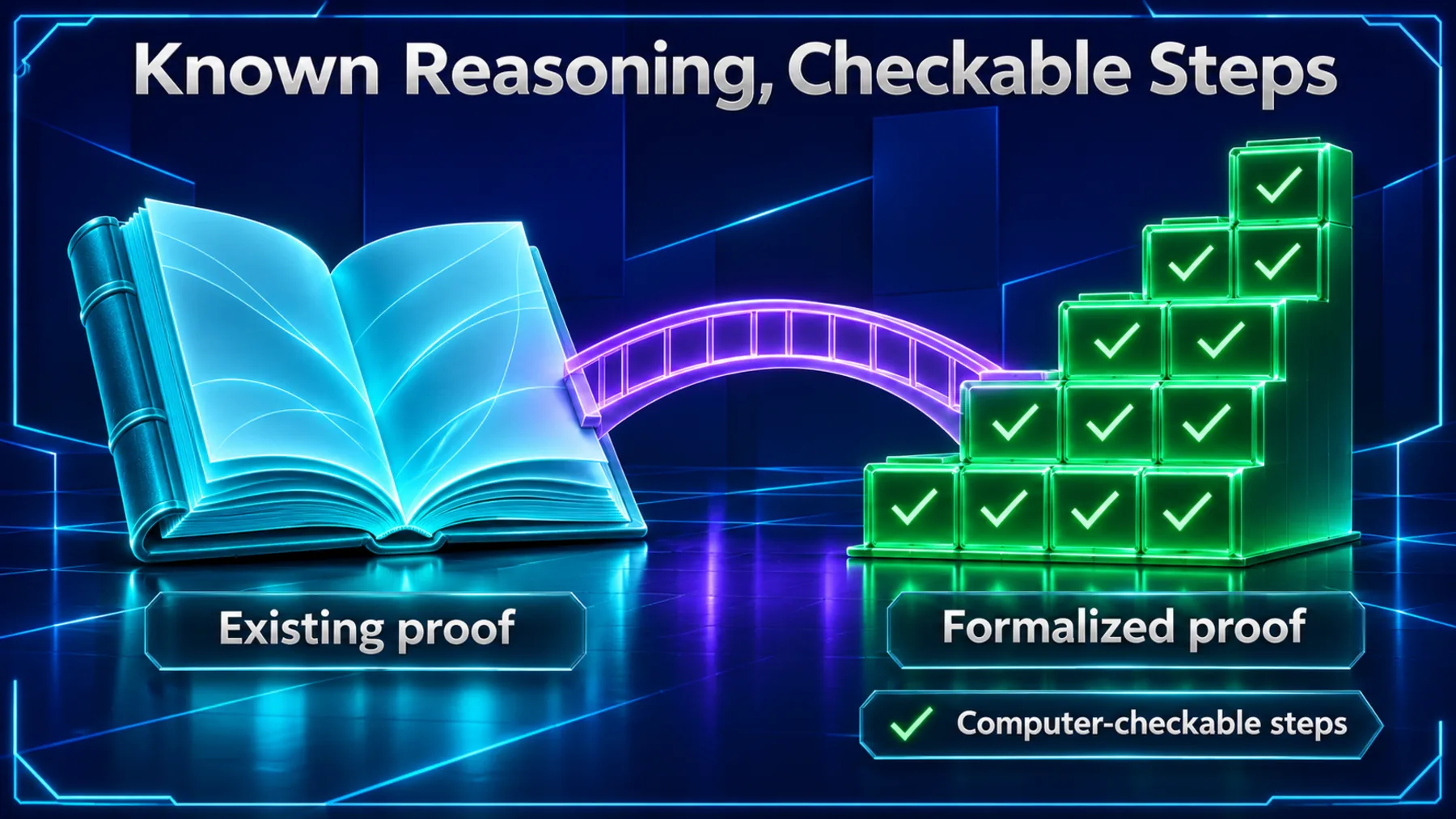
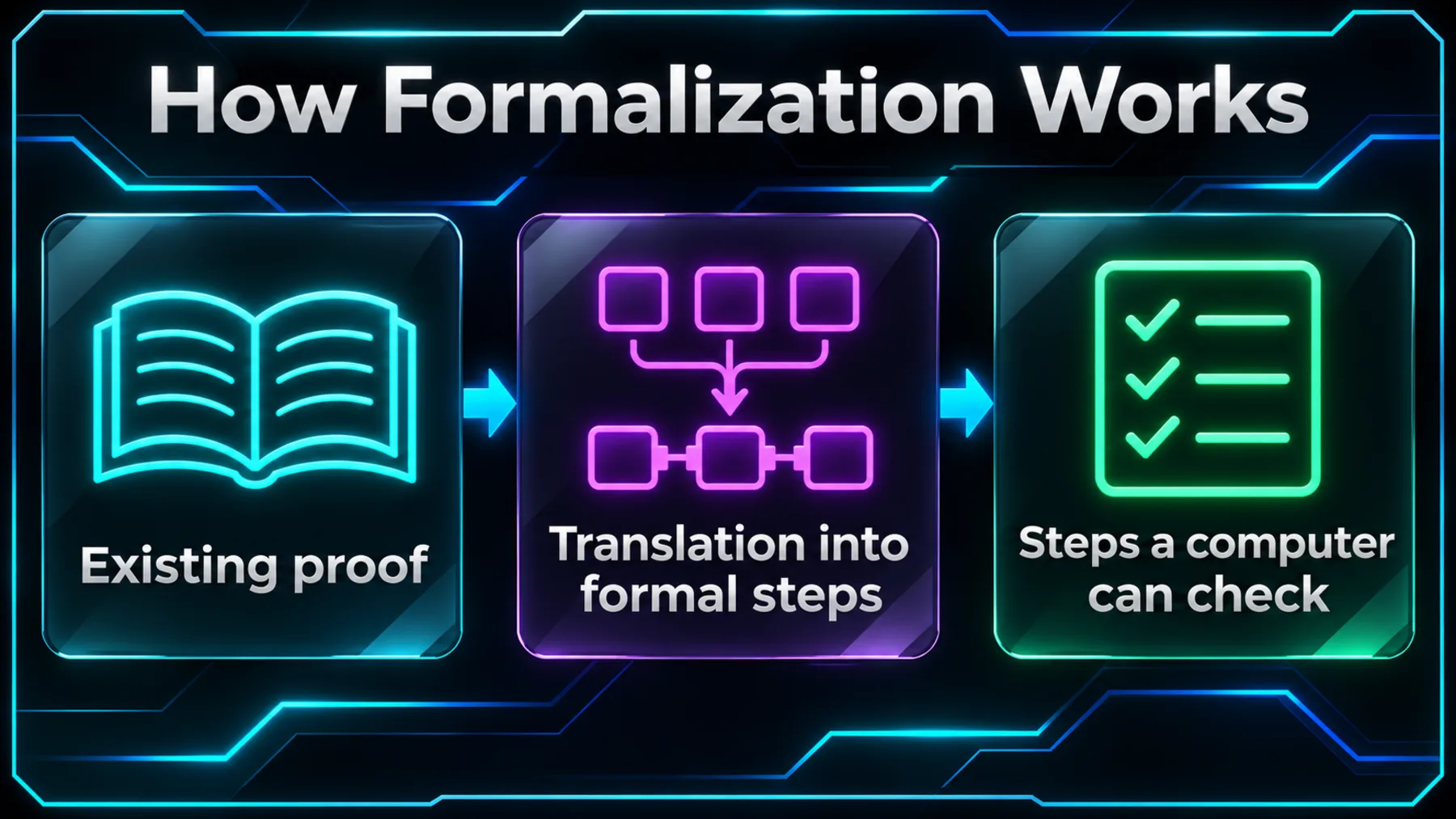
We already have the reasoning. Formalization makes its steps explicit enough for a computer to check.
Imagine we have a written mathematical proof in front of us. We are not asking for a different answer or a new route to the result. We are translating the existing reasoning into a formal language, with steps a computer can check.
That is the achievement here. Completion means the team finished this precise translation task, rather than stopping part-way through. It gives us a concrete result to examine without treating one experiment as a verdict on every kind of mathematical reasoning.
Two checkpoints, different finishes
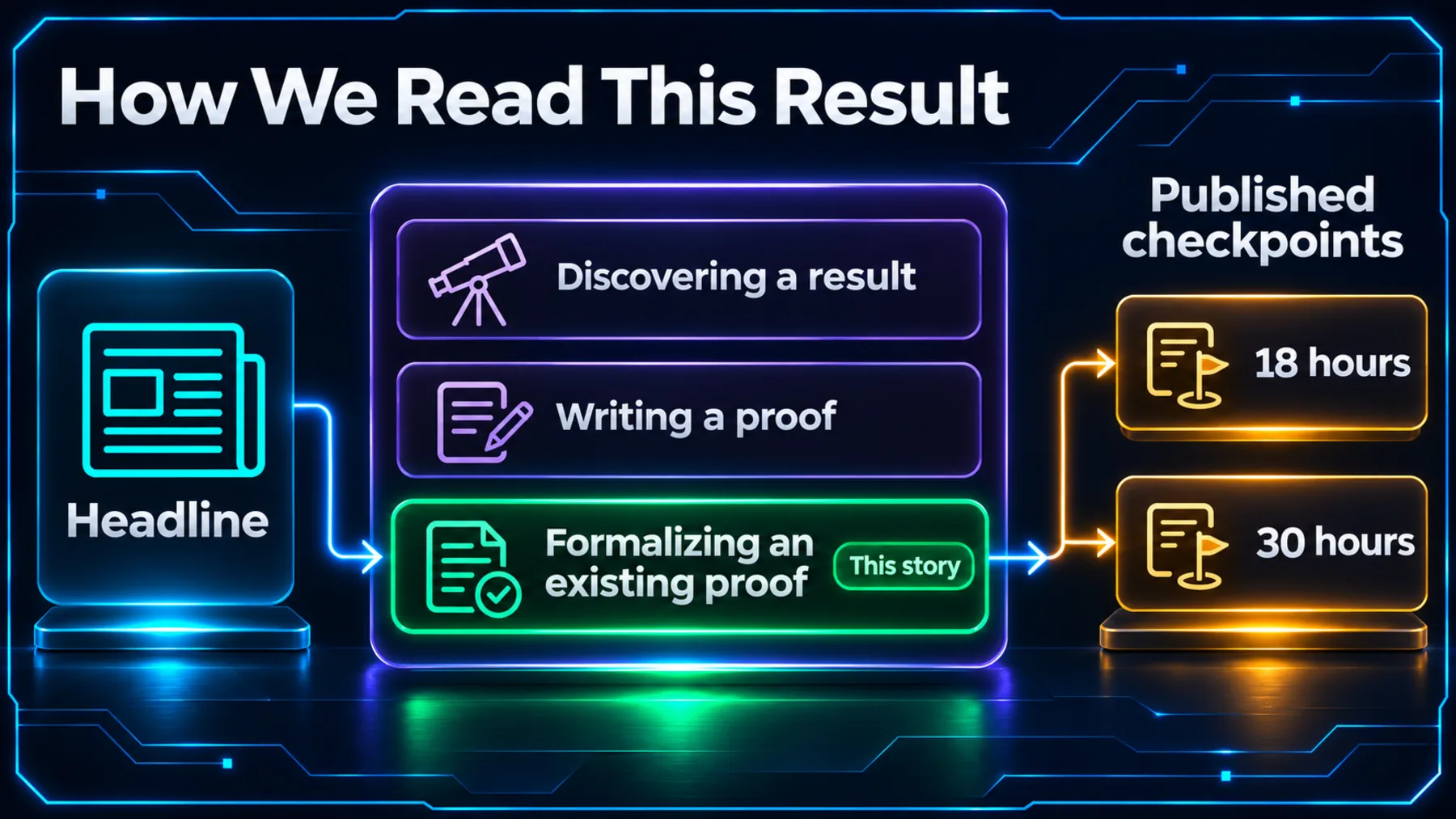
The same setup produced a clear gap at 18 hours and a completed formalization for Fable 5.2 at 30 hours.
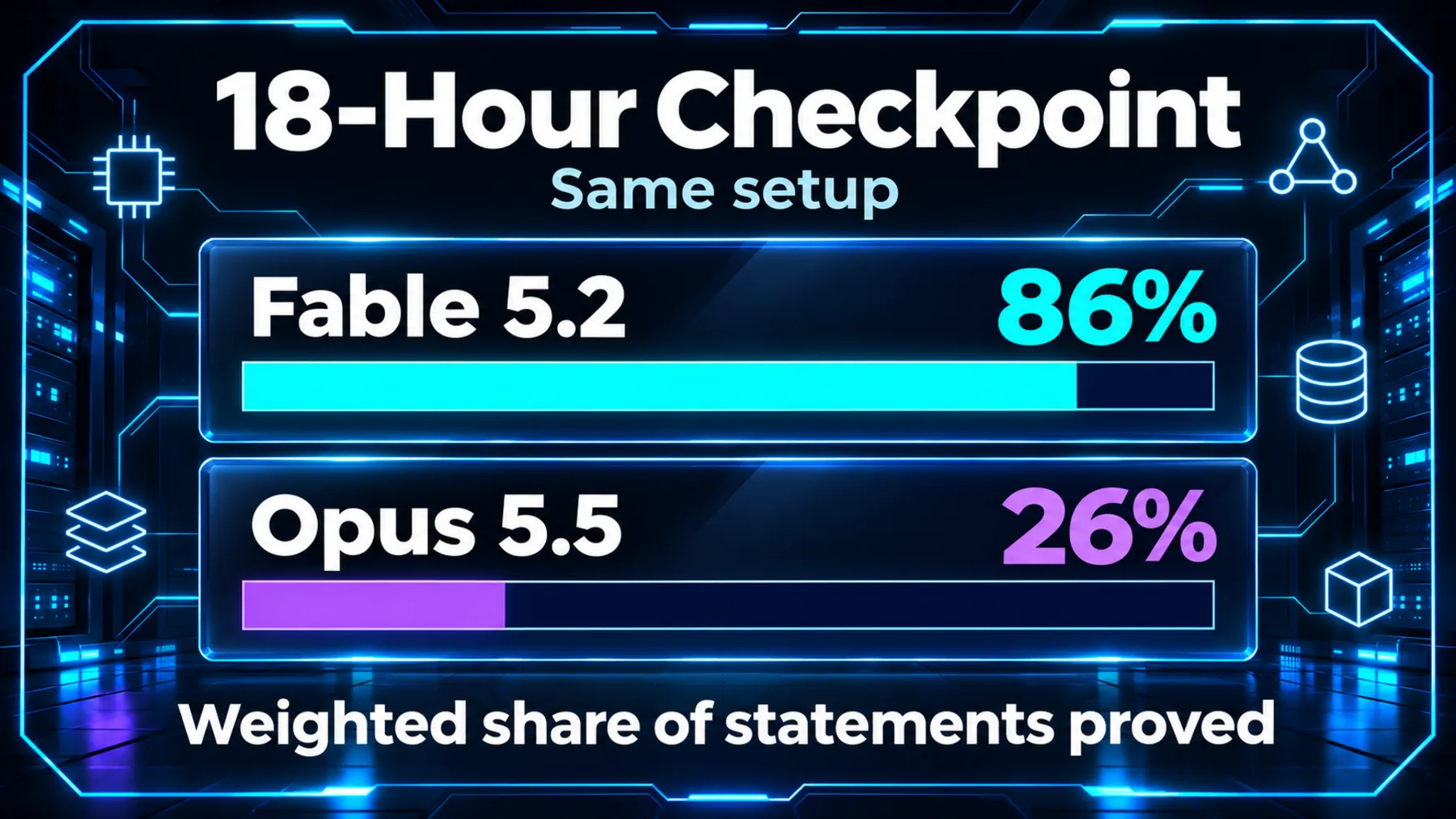
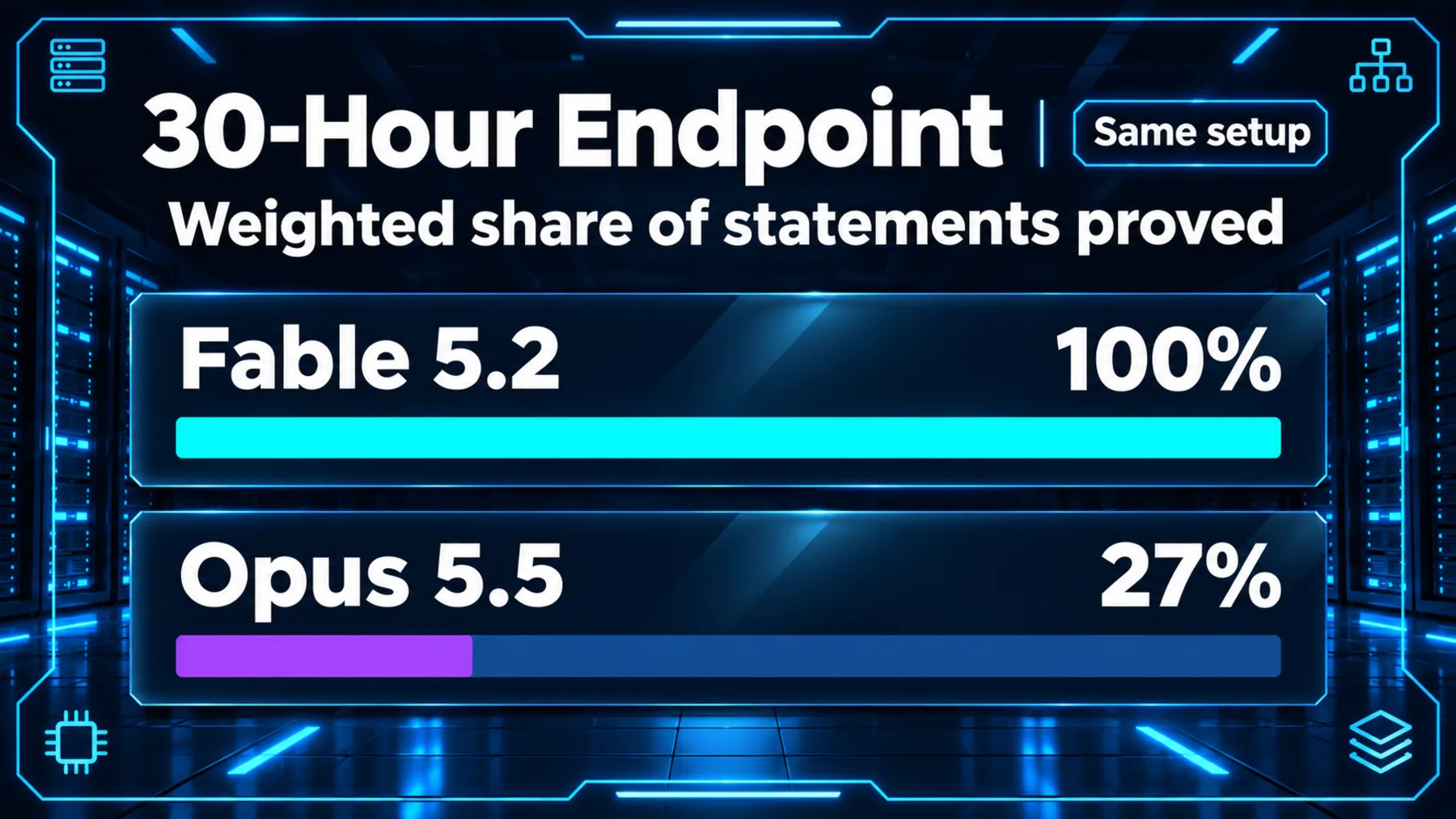
At 18 hours, Fable 5.2 had reached 86%, while Opus 5.5 had reached 26%. At 30 hours, Fable 5.2 was at 100% and Opus 5.5 at 27%. Both comparisons use the same setup.
These percentages measure weighted share of statements proved. They are not accuracy scores or raw counts of statements. The two published checkpoints show the progress difference; they do not describe every step between them.
What Claude announced
The opening statement names the team, the elapsed time and the work completed.
Claude’s announcement puts the definition of formalization alongside the headline result: translating the proof into a language a computer can check step by step. Keeping those together makes the achievement clear without suggesting that Fermat’s Last Theorem was newly discovered.
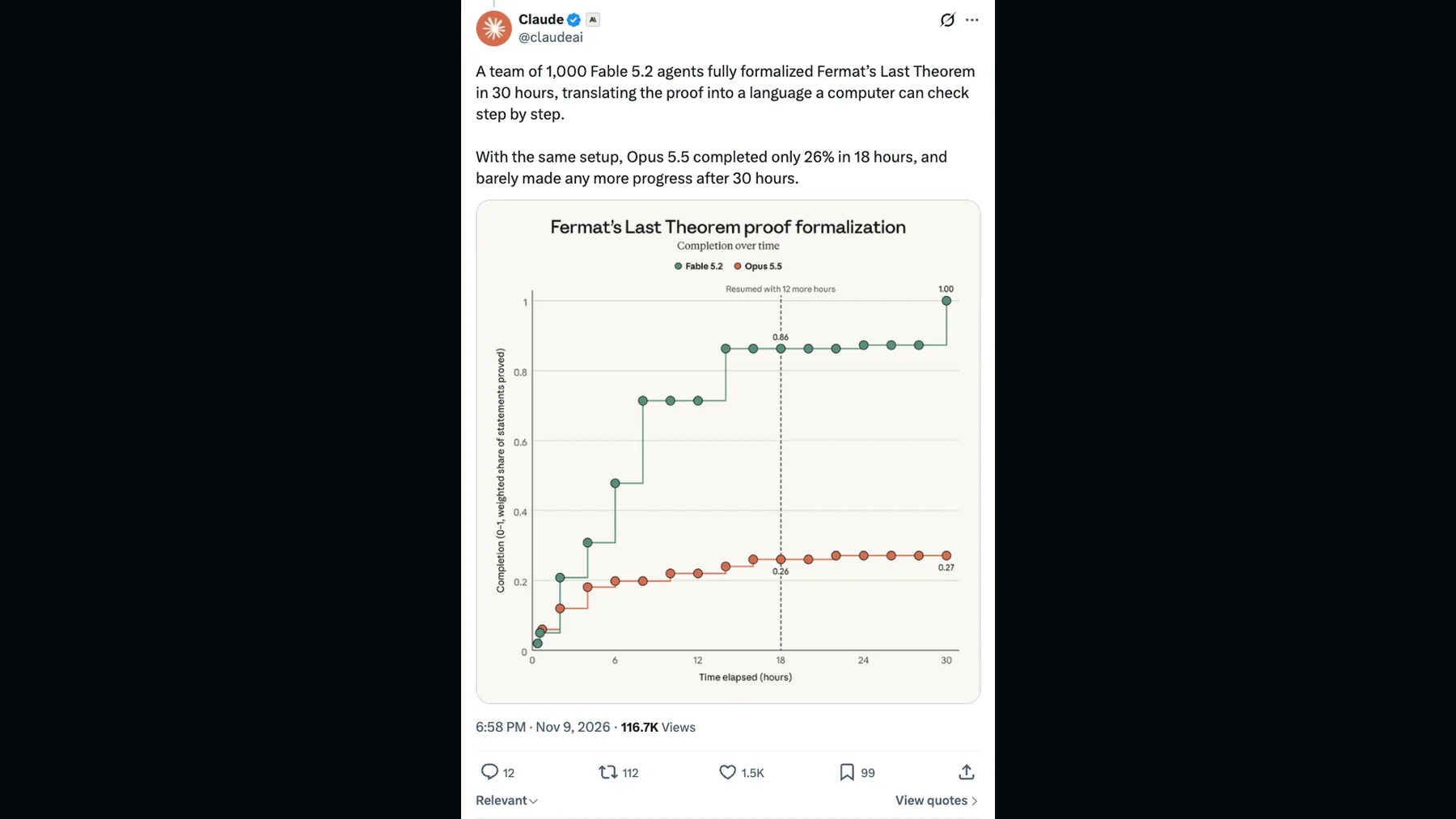
A team of 1,000 Fable 5.2 agents fully formalized Fermat’s Last Theorem in 30 hours, translating the proof into a language a computer can check step by step.
Claude
The numbers behind the finish
Two time points, two model versions and one measure: weighted share of statements proved.
Read the comparison row by row. At the earlier checkpoint, neither model had completed the formalization. At the later one, Fable 5.2 had finished, while Opus 5.5 had moved from 26% to 27%. Keeping the time and metric beside each value makes the contrast precise.
From proof to checkable steps
The sequence explains formalization without assuming a particular proof language or software system.
Start with the existing proof. Translate its reasoning into formal steps. Those steps can then be checked by a computer. This is a way to understand the task, rather than a description of how the agents were organised.
The distinction matters because producing a convincing explanation and expressing a proof in checkable form are different jobs. Here, the finish line was the completed formalization.
How we read the next AI maths headline
We get a clearer picture when we identify the task before comparing the scores.
When we encounter an AI maths headline, our first question should be what happened: was a result discovered, a new proof written, or an existing proof formalized? This announcement concerns the third. That gives the percentages their meaning.
We can then compare the stated checkpoints under the same setup and keep the conclusion tied to that task. The post provides no access or pricing details, so it is news of a completed experiment rather than instructions for starting our own run.
Completion is the real story
Fable 5.2 finished a specific formalization task. That is a substantial result without turning it into a claim about all mathematics.
The endpoint is what makes this result stand out. Fable 5.2’s team reached full formalization in 30 hours, while Opus 5.5 remained at 27% under the same setup. The known proof became a completed sequence of computer-checkable steps.
We can take that achievement seriously on its own terms. It demonstrates completion of this task; it does not need a claim of new mathematical discovery or general model superiority to make it interesting.
Fable 5.2’s achievement is completing the formalization of an existing proof in 30 hours—not discovering a new theorem.
Altior · Editorial synthesis
Make sense of the Fermat result
Write a plain-English explanation of this Fermat’s Last Theorem formalization result using only the facts below. Aim for 250 words, plus a comparison table. Claude’s announcement: “A team of 1,000 Fable 5.2 agents fully formalized Fermat’s Last Theorem in 30 hours, translating the proof into a language a computer can check step by step.” With the same setup, the published checkpoints were: Time | Fable 5.2 | Opus 5.5 18 hours | 86% | 26% 30 hours | 100% | 27% The percentages measure weighted share of statements proved, not accuracy or raw statement counts. Explain what the team completed and why translating an existing proof into computer-checkable steps differs from discovering a theorem or finding a new proof. Reproduce the two checkpoints in the table, keeping the model versions, times and metric exact. Explain what the comparison establishes about this task without turning it into a general model ranking. Finish with a one-sentence summary suitable for sharing with a colleague. Do not invent intermediate results, speed-up multiples, costs, access instructions, a proof language or an agent coordination method. This is an explanation of the announcement, not a reproduction or verification of the experiment. Source: https://x.com/claudeai/status/2119867129751056485Ready to copy
Remember the task, then the score
The result to remember is full formalization by 1,000 Fable 5.2 agents in 30 hours, against Opus 5.5’s 27% under the same setup. Formalization, not discovery.
Follow the original announcement for any further details: https://x.com/claudeai/status/2119867129751056485
Try the promptWhat we are watching for
- Further details of the proof language, checking system and agent coordination.
- Any announcement of access or pricing.
- A published reproduction of the experiment.